
Key takeaways
- Find the best knife to cut raw steak cleanly at home: compare blade length, steel, handle grip and care so every slice stays smooth and safe at dinner.
Cutting raw steak is a job for an 8-inch chef’s knife, not a small paring knife or a serrated bread knife. The long, straight edge slices through a thick cut in one smooth stroke, which keeps the meat from tearing and leaves a clean face for even cooking. A short blade forces the cook to saw back and forth, and a dull blade crushes the fibers instead of cutting them. The two knives in this guide both use an 8-inch chef’s blade, and the choice comes down to grip, weight and care. Both knives handle portioning, trimming and slicing, so the choice comes down to grip, weight and care.

This guide is for home cooks who portion steaks, trim fat and cut raw meat for the grill or the pan. It compares two 8-inch chef’s knives, using the names and specifications shown on their Amazon pages, so the decision rests on blade steel, handle design and how the knife feels during a long prep session.
Quick Picks
As an Amazon Associate we earn from qualifying purchases
| Product | Best for | Key spec from title |
|---|---|---|
| Victorinox Fibrox Pro 8-Inch Chef’s Knife | The all-round knife for raw meat | 8-inch stamped blade |
| Mercer Culinary Millennia 8-Inch Chef’s Knife M22608 | A sure grip on wet meat | Santoprene handle |
How to Choose
Blade Length and Profile
An 8-inch blade suits raw steak because the edge spans the full width of most cuts, so one draw stroke separates the slice cleanly. The Victorinox blade runs 7.9 inches on an extra-wide profile, which gives knuckle clearance above the board and room for the hand during a rocking cut. The Mercer blade runs a full 8 inches with a straighter profile, which suits long slicing strokes through thick steaks. A shorter blade cannot span a wide ribeye, and a longer blade feels unwieldy for cooks with small hands. Measure the widest cut usually portioned at home, and pick the blade that covers it in one stroke. A shorter blade cannot span a wide ribeye.
Steel Hardness and Sharpening
Chef’s knives use stainless or high-carbon steel, and the hardness decides how often the edge needs work. The Victorinox uses a high-carbon stainless steel that resists rust and sharpens easily on a honing rod or a stone. The Mercer uses a one-piece high-carbon Japanese steel hardened to 53 to 54 on the Rockwell scale, which is soft enough to hone back quickly yet hard enough to hold through a day of board work. Softer steel sharpens fast and forgives rough handling, while harder steel holds an edge longer but chips more easily on bone. For raw meat, either steel works well if the edge stays keen. Either steel works well if the edge stays keen.
Handle Grip With Wet Hands
Raw meat leaves hands wet and greasy, so the handle decides whether the knife stays safe during the cut. The Victorinox Fibrox Pro handle uses a thermoplastic elastomer that stays non-slip even when wet, and its ergonomic shape fills the palm without hot spots. The Mercer Millennia handle blends Santoprene rubber over a polypropylene core, with textured finger points and a real finger guard molded into the front. Both handles work well with wet hands, yet the Mercer finger guard adds extra protection when the hand slides forward during a forceful cut. Hold the knife with wet hands if possible before buying. Hold the knife with wet hands if possible before buying.
Care, Cleaning and Storage
A chef’s knife lasts decades when it is washed, dried and stored properly, and the care rules differ between these two models. The Victorinox uses dishwasher-safe materials, so it survives the machine, though hand washing still protects the edge better. The Mercer is hand wash only, so it lives on a magnetic strip or in a tray rather than the dishwasher rack. Both knives should be stored blade-up in a block, on a magnetic strip or in a sheath, never loose in a drawer where the edge knocks against other tools. A honing rod before each use keeps the edge aligned between sharpenings. A honing rod before each use keeps the edge aligned between sharpenings.
The 2 Best Options
Victorinox Fibrox Pro 8-Inch Chef’s Knife
The Victorinox Fibrox Pro is the default 8-inch chef’s knife for most home kitchens, and it earns that spot with a light, balanced design that handles raw steak without fuss. The blade is stamped from high-carbon stainless steel in Switzerland, with an extra-wide profile that gives the edge height and knuckle room above the board. The tapered, laser-tested edge arrives ready for onions, herbs and raw meat on a weeknight board. The Fibrox Pro handle stays grippy even with wet hands, and the knife weighs 6.4 ounces, light enough that a long prep session does not turn into a wrist workout. The extra-wide profile gives knuckle room above the board.
Specs
- 7.9-inch blade length
- Stamped high-carbon stainless steel blade
- Extra-wide blade profile
- Fibrox Pro thermoplastic elastomer handle
- Non-slip grip
- Dishwasher-safe materials
- NSF approved
- 6.4 oz weight
- 13.4 inches overall length
- Made in Switzerland
- Lifetime warranty against defects
- Tapered, laser-tested edge
Best for: home cooks who want one light, reliable 8-inch knife for raw meat and everyday prep.
Watch out for: the blade runs slightly short of a full 8 inches at 7.9 inches, and the stamped construction feels lighter than a forged knife.
Mercer Culinary Millennia 8-Inch Chef’s Knife M22608
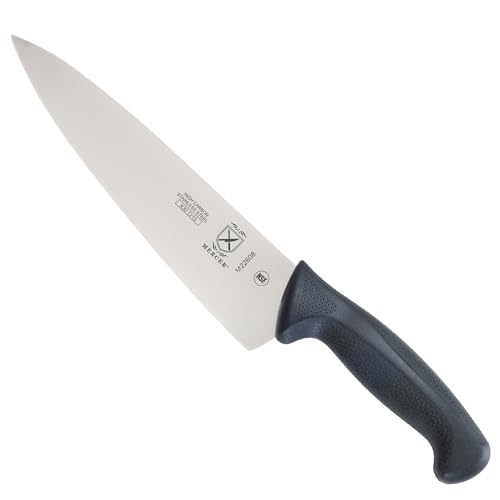
The Mercer Culinary Millennia M22608 is the culinary-school standard, built for students and line cooks who cut all day and need a knife that keeps working. The blade is one piece of high-carbon Japanese steel, stamped to shape and finished at 53 to 54 on the Rockwell scale, with a 15-degree edge that slices raw steak in long, clean strokes. The Santoprene handle carries textured finger points that lock a wet grip in place, and a polypropylene core underneath gives the handle its working strength. The Millennia line carries NSF certification, a detail borrowed from professional kitchens where sanitation rules shape every tool choice. The blade carries the NSF mark.
Specs
- 8-inch blade length
- One-piece high-carbon Japanese steel blade
- 15-degree edge angle
- 53 to 54 HRC hardness
- Santoprene handle with textured finger points
- Polypropylene handle core
- 6.7 oz weight
- Hand wash only
- NSF certified
- Limited lifetime warranty from Mercer Tool Corp
- Finger guard molded into the handle
Best for: cooks who want a sure grip on wet meat and a knife built for long shifts at the board.
Watch out for: it is hand wash only, so it cannot go in the dishwasher like the Victorinox.
Which One Fits Your Situation
Portioning Steaks for the Grill
Grill nights mean cutting several steaks to even thickness so they cook at the same rate. The Victorinox Fibrox Pro fits this situation, because its extra-wide blade keeps the knuckles clear of the board and its light weight stays comfortable through a full tray of meat. Use long draw strokes rather than sawing, and let the edge do the work instead of pressing down.
Trimming Fat and Silver Skin
Trimming calls for control and a grip that stays put when the hands get greasy. The Mercer Millennia fits this situation, because its textured Santoprene handle and molded finger guard lock the hand in place during close work. Hold the fat with one hand and slide the blade flat beneath it, keeping the edge angled slightly upward so it skims the fat without digging into the meat.
A First Good Chef’s Knife
Cooks buying their first chef’s knife should pick the one that forgives mistakes and stays easy to care for. The Victorinox Fibrox Pro fits this situation, because its dishwasher-safe materials survive a busy kitchen and its stainless blade resists rust when it sits wet for a while. Learn the pinch grip, practice the rocking cut on onions, and use the knife for raw meat and vegetables alike until the motion feels natural.
Long Prep Sessions
A big dinner means an hour or more at the board, and the knife needs to stay comfortable for the whole session. Both knives suit long prep, yet the Mercer Millennia edges ahead for cooks with larger hands, since its handle fills the palm and its finger guard prevents slipping. Take a break every twenty minutes, hone the edge when it starts to drag, and keep a damp cloth nearby for wiping the blade.
Common Mistakes
- Using a dull knife on raw steak, which tears the meat instead of slicing it cleanly and makes the work harder.
- Sawing back and forth instead of using long, smooth draw strokes.
- Cutting raw meat on the same board as vegetables without washing the board first.
- Storing the knife loose in a drawer, where the edge knocks against other tools and dulls faster.
- Putting a hand-wash-only knife in the dishwasher, which dulls the edge and damages the handle over time.
Frequently Asked Questions
What kind of knife is best for cutting raw steak?
An 8-inch chef’s knife is the best tool for cutting raw steak, because the long edge spans the width of most cuts and slices through in one smooth stroke. The Victorinox Fibrox Pro and the Mercer Culinary Millennia both use an 8-inch blade, and either one handles portioning, trimming and slicing well. A boning knife suits trimming around bones only.
Should I cut raw steak with the grain or against it?
Cut against the grain for serving, since short fibers make each bite more tender, and cut with the grain only when portioning a large piece into smaller steaks. Look at the lines running through the meat to find the grain direction, then slice across those lines. A sharp chef’s knife cuts cleanly in either direction.
How do I keep raw meat from slipping while I cut?
Pat the steak dry with a paper towel before cutting, since a dry surface grips the board better than a wet one. Hold the meat firmly with the fingertips curled under, keep the blade sharp so it bites instead of sliding, and use a damp cloth under the board. A textured grip also helps when the hands get wet.
Can I use the same knife for raw meat and vegetables?
Yes, provided the knife and board are washed between uses. Cut the vegetables first, then the raw meat, or wash the blade and board with hot soapy water before switching. A stainless blade like the Victorinox Fibrox Pro resists staining from meat juices, while a high-carbon blade like the Mercer Millennia needs drying right after washing.
More from Amazon
Programs that pair well with the guide above. Offers and eligibility are set by Amazon and may change.
Set up recurring deliveries of everyday items on eligible products. Terms and savings are set by Amazon.
Explore Subscribe & SaveCollect the home and kitchen items you want in one registry that guests can shop from.
Create a wedding registryFree shipping on eligible items, Prime Video and more. Eligible new members can start with a free trial.
Start a Prime free trialAudiobooks and podcasts to listen to on the go. Eligible new members can start with a free trial.
Try Audible freeAs an Amazon Associate we earn from qualifying purchases.

Write Your Review
No reviews yet. Be the first to share your experience!