
Our Short List of 3
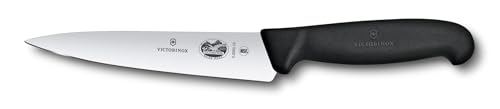
- Best for: Light everyday prep, smaller hands and cooks who want a knife that is easy to handle and easy to clean.
- Blade length: 6 inches
- Blade material: Stainless steel
- Blade edge: Plain, straight edge
- Construction type: Stamped

- Best for: Cooks who want a grippy, pro-style handle and a blade that is quick to sharpen.
- Blade length: 6 inches
- Blade material: One-piece high-carbon Japanese steel
- Construction type: Stamped
- Handle material: Santoprene and polypropylene, ergonomic handle with textured finger points
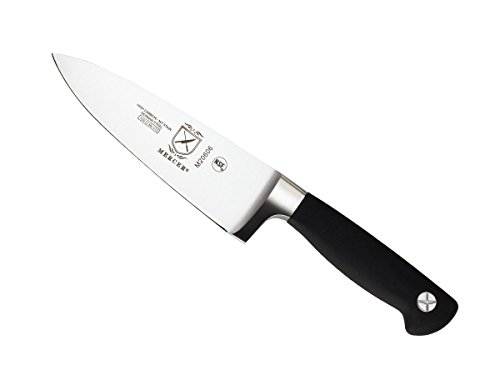
- Best for: Cooks who want a forged 6 inch chef knife with a rubberised handle that holds its grip when wet.
- Blade length: 6 inches (15.2 cm)
- Blade material: High-carbon German steel, X50CrMoV15
- Construction type: Precision forged
- Handle material: Santoprene, non-slip grip
All 4 Picks at a Glance
| Product | Specs | Action |
|---|---|---|
| Victorinox Fibrox Pro 6 Inch Straight Edge Chef’s Knife |
| Check price on Amazon |
| Mercer Culinary Millennia 6 Inch Chef’s Knife |
| Check price on Amazon |
| Mercer Culinary Genesis 6 Inch Chef’s Knife |
| Check price on Amazon |
 WÜSTHOF Classic 6 Inch Chef’s Knife |
| Check price on Amazon |
Key takeaways
- Find the best 6 inch knife for everyday cooking at home, from light stamped chef knives to forged German blades, with steel, handle and care compared.
A 6 inch knife sits in the gap between a paring knife and a full-size chef knife, and that gap is where most cooking happens. An 8 inch blade can feel long and heavy when the board is small and the task is a dice rather than a catering shift. A 6 inch blade still handles slicing, chopping and mincing, yet the shorter length keeps the tip closer to your hand, which makes the knife easier to steer through herbs, garlic and small vegetables.
This guide suits home cooks with smaller hands or smaller kitchens, renters who prep on a cramped counter, and anyone who finds a long chef knife tiring to control. It also suits cooks building a first serious knife drawer without buying a whole block set. The four knives below were chosen from their names and specs on their Amazon listings, covering a light stamped chef knife, two Mercer Culinary chef knives in stamped and forged steel, and a forged German classic.
Quick Picks
As an Amazon Associate we earn from qualifying purchases.
| Product | Best for | Key spec from title |
|---|---|---|
| Victorinox Fibrox Pro 6 Inch Straight Edge Chef’s Knife | Light everyday prep and smaller hands | 6-inch stainless steel blade with non-slip handle |
| Mercer Culinary Millennia 6 Inch Chef’s Knife | A pro-style grip on a modest budget | 6-inch high-carbon Japanese steel blade |
| Mercer Culinary Genesis 6 Inch Chef’s Knife | A forged blade with a rubberised grip | 6-inch precision-forged high-carbon German steel blade |
| WÜSTHOF Classic 6 Inch Chef’s Knife | A forged knife bought for the long term | 6-inch forged high-carbon stainless steel blade |
How to Choose
Blade length and how the knife balances in your hand
Six inches is the blade length, not the whole knife, so check the overall length and weight as well before you buy. A 6 inch blade on a light stamped knife can weigh barely more than a large paring knife, while the same blade length on a forged knife with a full bolster can feel noticeably heavier at the handle end. A short blade suits a small board and a pinch grip near the bolster, whereas a cook who rocks the blade through large piles of vegetables may miss the extra length of an 8 inch knife. Compare the listed weight and overall length, because two knives with the same blade length can still feel very different in use.
Stamped or forged construction
Stamped knives are cut from a sheet of steel, so they tend to be thinner, lighter and easier to sharpen, and they usually cost less than forged knives of the same length. Forged knives are shaped from a single piece of heated steel, which gives a thicker spine, a bolster where blade meets handle, and a heavier, more planted feel during chopping. Neither construction is automatically better for a home kitchen. A stamped knife suits cooks who value a light blade and quick handling for vegetables and boneless meat, while a forged knife suits cooks who want heft for denser food and a handle that feels solid through longer prep sessions.
Steel type and how the edge holds up
Most 6 inch chef knives in this guide use stainless steel, yet the exact steel and hardness shape how often the edge needs attention. High-carbon Japanese steel, as used in the Mercer Culinary Millennia line, is made for easy edge maintenance and rapid sharpening, so a few passes on a honing steel keep it cutting cleanly. High-carbon German steel, as used in the Mercer Culinary Genesis and WÜSTHOF Classic knives, resists rust and discoloration while holding a working edge through regular use. Check the hardness figure when the listing gives one, and remember that a harder blade can stay sharp longer but may need more care around bones and frozen food.
Handle shape, grip and care
The handle decides whether a short knife feels secure or slippery, especially when your hands are wet from washing vegetables or handling raw chicken. A textured rubberised handle, such as the Santoprene grip on the Mercer Culinary knives or the Fibrox handle on the Victorinox, gives traction without needing a tight squeeze. A smooth synthetic handle with rivets, such as the polyoxymethylene handle on the WÜSTHOF Classic, feels firmer and more traditional, and it suits cooks who prefer a solid, shaped grip. Care matters too: some knives in this guide are listed as dishwasher safe, while others are hand wash only, and hand washing with a quick dry protects both edge and handle over time.
The 4 Best Options
Victorinox Fibrox Pro 6 Inch Straight Edge Chef’s Knife
- Best for: Light everyday prep, smaller hands and cooks who want a knife that is easy to handle and easy to clean.
- Blade length: 6 inches
- Blade material: Stainless steel
- Blade edge: Plain, straight edge
- Construction type: Stamped
Light everyday prep, smaller hands and cooks who want a knife that is easy to handle and easy to clean.
Check the model number on the listing before ordering, because Victorinox sells Fibrox knives in several blade lengths and shapes, and a 6 inch boning knife looks similar at a glance.
Victorinox Fibrox Pro 6 Inch Straight Edge Chef’s Knife fits the cook who wants a light, no-fuss blade for daily chopping without the weight of a forged knife. The straight edge slices cleanly through onions, peppers and herbs, and the short blade keeps the tip under control when the board is crowded. Its handle is shaped for a relaxed grip, so longer prep sessions feel less tiring than they do with a heavier knife. For a first good chef knife, a second knife for a partner, or a compact blade for a small kitchen, this is the easiest pick in the guide.
Watch out for: Check the model number on the listing before ordering, because Victorinox sells Fibrox knives in several blade lengths and shapes, and a 6 inch boning knife looks similar at a glance.
Mercer Culinary Millennia 6 Inch Chef’s Knife
- Best for: Cooks who want a grippy, pro-style handle and a blade that is quick to sharpen.
- Blade length: 6 inches
- Blade material: One-piece high-carbon Japanese steel
- Construction type: Stamped
- Handle material: Santoprene and polypropylene, ergonomic handle with textured finger points
Cooks who want a grippy, pro-style handle and a blade that is quick to sharpen.
This knife is not the dishwasher-safe option in the guide, so plan on washing and drying it by hand after each use.
Mercer Culinary Millennia 6 Inch Chef’s Knife fits the cook who likes a professional-style handle and a blade that is simple to keep sharp. The high-carbon Japanese steel takes an edge readily, and the textured finger points plus the protective finger guard give a secure hold when hands are damp. At 11 inches overall, the knife stays compact on a small board while still offering enough blade for slicing chicken breasts, dicing potatoes and mincing herbs. It is a practical choice for culinary students, line cooks at home, and anyone who sharpens their own knives.
Watch out for: This knife is not the dishwasher-safe option in the guide, so plan on washing and drying it by hand after each use.
Mercer Culinary Genesis 6 Inch Chef’s Knife
- Best for: Cooks who want a forged 6 inch chef knife with a rubberised handle that holds its grip when wet.
- Blade length: 6 inches (15.2 cm)
- Blade material: High-carbon German steel, X50CrMoV15
- Construction type: Precision forged
- Handle material: Santoprene, non-slip grip
Cooks who want a forged 6 inch chef knife with a rubberised handle that holds its grip when wet.
The full bolster can make sharpening near the heel of the blade awkward, so check how the bolster meets the edge if you sharpen the knife yourself.
Mercer Culinary Genesis 6 Inch Chef’s Knife fits the cook who wants forged construction without a heavy, slick handle. The precision-forged German steel blade has a taper-ground edge and a spear point, which helps with detail cuts at the tip as well as straight slicing along the board. Its Santoprene handle stays grippy when wet, and the full tang running through the handle gives the knife a balanced feel despite the short blade. For cooks moving up from a stamped knife to something with more substance, this is the most forgiving forged option here.
Watch out for: The full bolster can make sharpening near the heel of the blade awkward, so check how the bolster meets the edge if you sharpen the knife yourself.
WÜSTHOF Classic 6 Inch Chef’s Knife
- Best for: Cooks who want a forged German 6 inch chef knife with a solid riveted handle and a long service life.
- Blade length: 6 inches (150 mm)
- Blade material: High-carbon stainless steel, X50 CrMoV 15
- Construction type: Fully forged from a single block of steel
- Hardness: Tempered to 58 HRC
Cooks who want a forged German 6 inch chef knife with a solid riveted handle and a long service life.
At 6.4 ounces it is the heaviest knife in this guide, so cooks who prefer a very light blade should weigh that against the forged feel before buying.
WÜSTHOF Classic 6 Inch Chef’s Knife fits the cook who treats a chef knife as a long-term purchase rather than a stopgap. The blade is forged from a single block of high-carbon stainless steel and tempered to 58 HRC, and the Precision Edge Technology sharpening gives a keen edge for slicing, dicing and chopping. Its full tang and triple-riveted handle feel solid and balanced, while the full bolster and finger guard add control during heavier cuts. For a cook who wants one dependable 6 inch knife for years of daily use, this is the strongest candidate in the guide.
Watch out for: At 6.4 ounces it is the heaviest knife in this guide, so cooks who prefer a very light blade should weigh that against the forged feel before buying.
Which One Fits Your Situation
You have small hands or a small kitchen
Choose the Victorinox Fibrox Pro 6 Inch Straight Edge Chef’s Knife. Its stamped blade and 3.2 ounce weight make it the lightest knife here, and the short overall length suits a compact board and a crowded counter. The non-slip handle helps a smaller grip stay secure, and the dishwasher-safe listing makes cleanup simple after a quick weeknight meal.
You sharpen your own knives and want easy upkeep
Choose the Mercer Culinary Millennia 6 Inch Chef’s Knife. Its stamped high-carbon Japanese steel is made for rapid sharpening and easy edge maintenance, so a honing steel and an occasional sharpening session keep it cutting well. The textured handle and finger guard add safety during longer prep, and the NSF listing suits cooks who take kitchen hygiene seriously.
You want a forged knife that still grips when wet
Choose the Mercer Culinary Genesis 6 Inch Chef’s Knife. The forged German steel blade gives more heft than the stamped options, while the Santoprene handle holds its grip with damp hands in a way a smooth handle does not. The full tang and full bolster add balance, making it a good step up for cooks who are ready for a forged blade.
You want one knife to keep for years
Choose the WÜSTHOF Classic 6 Inch Chef’s Knife. Its forged single-block blade, 58 HRC temper and triple-riveted handle are built for repeated daily use, and the lifetime warranty backs that intent. The heavier feel suits confident chopping, and the Solingen-made construction gives it a clear place as the long-term knife in this guide.
Common Mistakes
- Buying an 8 inch knife when a 6 inch blade would suit your board, your hands and your storage better.
- Choosing by brand alone without checking the blade length on the listing, since every brand here sells the same knife in several lengths.
- Putting a hand-wash-only knife in the dishwasher, which can dull the edge and wear the handle over time.
- Cutting on glass, stone or ceramic boards, which blunts any edge far faster than wood or plastic.
- Storing a loose knife in a drawer with other tools, where the edge knocks against metal and goes dull between uses.
Frequently Asked Questions
Is a 6 inch chef knife big enough for everyday cooking?
Yes, for most home cooking a 6 inch chef knife handles the common tasks well, including slicing onions, dicing potatoes, mincing garlic and trimming chicken. The shorter blade gives more control on a small board, and it suits cooks with smaller hands. Cooks who regularly slice large roasts, melons or cabbage may still want a longer blade for those jobs.
What is the difference between a 6 inch chef knife and a 6 inch utility knife?
A 6 inch chef knife has a wider, curved blade shaped for rocking cuts, chopping and mincing on a board. A 6 inch utility knife has a narrower, straighter blade meant for slicing sandwiches, trimming meat and cutting smaller items in hand. Both are useful, but the chef knife covers more of the general prep work in a home kitchen.
Should a 6 inch knife be stamped or forged?
Either construction can work well, and the choice comes down to feel and care. Stamped knives are lighter, thinner and usually easier to sharpen, which suits quick daily prep. Forged knives are heavier, with a bolster and a more solid handle, which suits cooks who want heft and a long service life. Try to compare listed weight and handle style before deciding.
How should I care for a 6 inch chef knife?
Wash the blade by hand with mild soap, dry it straight away, and store it in a block, on a magnetic strip or in a blade guard. Hone the edge regularly with a honing steel and sharpen it when honing no longer restores a clean cut. Keep the knife away from the dishwasher unless the listing states it is dishwasher safe, and avoid cutting on hard surfaces.
More from Amazon
Programs that pair well with the guide above. Offers and eligibility are set by Amazon and may change.
Set up recurring deliveries of everyday items on eligible products. Terms and savings are set by Amazon.
Explore Subscribe & SaveCollect the home and kitchen items you want in one registry that guests can shop from.
Create a wedding registryFree shipping on eligible items, Prime Video and more. Eligible new members can start with a free trial.
Start a Prime free trialAudiobooks and podcasts to listen to on the go. Eligible new members can start with a free trial.
Try Audible freeAs an Amazon Associate we earn from qualifying purchases.
Write Your Review
No reviews yet. Be the first to share your experience!