
Key takeaways
- Compare handmade santoku knives by forging, steel, edge and handle, with two hand-forged picks whose Amazon listings state the craft plainly.
The real decision with a handmade santoku is not which brand sounds most traditional, but whether the listing actually describes hand work or only borrows the word. Plenty of factory knives carry “hand-sharpened” or “hand-polished” in their bullets while the blade itself was stamped and ground by machine. A genuine handmade santoku should name the forging behind it: layers of steel folded and hammered, a stated hardening process, and a handle fitted by hand. That wording is the first filter, and it is stricter than it looks.

This guide is for home cooks who want one santoku with real craft behind it, gift buyers looking for a knife that feels personal rather than mass produced, and cooks who already own a chef knife and want a shorter Japanese-style blade for vegetables, fish and boneless meat. Every pick below was chosen from its Amazon listing details: the forging language it uses, the steel and hardness it states, the blade length it claims, and the handle material it names.
Quick Picks
As an Amazon Associate we earn from qualifying purchases
| Product | Best for | Key spec from title |
|---|---|---|
| FAMCÜTE Santoku Knife 7 inch | Daily prep where the edge must stay keen | Hand Forged, 5 Layers 9CR18MOV, rosewood handle |
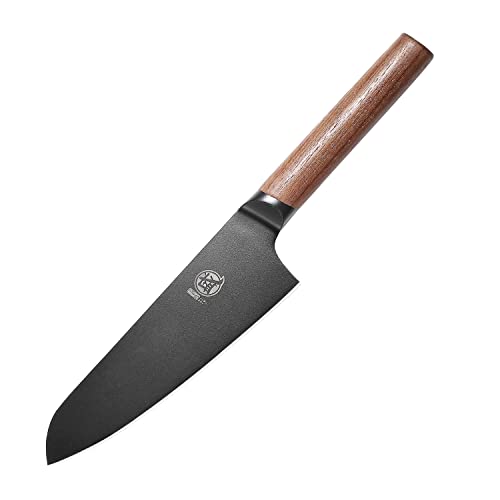
| MITSUMOTO SAKARI 7 inch Santoku | A visibly handcrafted blade for the kitchen | Hand-forged, black titanium coated, walnut handle |
How to Choose
Read the Listing for Real Hand Work
“Handmade” is easy to print and hard to prove, so read the listing the way a sceptic would. Look for verbs tied to the blade itself: hand-forged, handcrafted, folded and hammered, or a production time measured in weeks. Both knives below clear that bar in their own words, one with a stated 60-day process of quenching and vacuum nitriding, the other with a stated 90-day hand-forging cycle. Treat “hand-sharpened edge” or “hand-polished finish” alone as a weaker claim, since those steps can sit on top of a machine-made blade. If the listing never says who forged the steel or how, the knife is not a handmade pick, whatever the title suggests. Treat a title-only claim as marketing, not evidence.
Match the Steel to Your Maintenance Habits
The two steels here ask for different routines, and that difference matters more than the brand names. The FAMCÜTE blade is five layers of 9CR18MOV hardened to 62 HRC, a hard stainless that holds a fine edge through long vegetable sessions but takes more effort to restore once it finally dulls. The MITSUMOTO SAKARI blade is German 1.4116 alloy at 57 plus or minus 2 HRC, a softer steel that is easier to hone back to sharp and more forgiving of a quick steeling before dinner. Cooks who sharpen rarely should favour the harder blade; cooks who enjoy touching up an edge should favour the softer one. Harder steel also resists edge rolling during heavy chopping.
Check Blade Length and Profile for Your Board
A santoku earns its place by being shorter and flatter than a chef knife, and seven inches is the size most home cooks reach for. Both picks are seven-inch blades, which suits a standard board and a normal home kitchen without crowding the workspace. Watch for listings that disagree with themselves: one of the picks below carries a seven-inch title while a size field elsewhere in its listing reads seven and a half inches, so measure the blade on arrival and keep the box until you have confirmed it. A Granton or hammered face helps release thin slices of potato and onion, while a plain flat edge gives a longer uninterrupted cutting surface for push cuts. Confirm it on arrival.
Judge the Handle and the Weight in Your Hand
A handmade blade with an uncomfortable handle is still a bad buy, so weigh the handle material and the stated weight together. The FAMCÜTE knife uses an octagonal African rosewood handle, shaped to sit the same way in either hand and to resist slipping when wet. The MITSUMOTO SAKARI knife uses a walnut handle and weighs 4.96 ounces, light enough for long prep sessions without tiring the wrist. Neither knife is dishwasher safe, which is normal for this class: hand washing and immediate drying protect both the edge and the wood. If you have small hands or a small board, favour the lighter knife; if you want a handle with more presence, favour the rosewood. Balance matters too.
The 2 Best Options
FAMCÜTE Santoku Knife 7 inch
The FAMCÜTE is the working pick of this pair, built around a five-layer 9CR18MOV blade that the listing says is hand-forged through a 60-day process of quenching, vacuum nitriding and anti-rust treatment, reaching 62 HRC. That hardness is the point: the edge stays keen through repeated vegetable prep, and the layered steel gives the blade a visible structure that a plain stamped knife cannot match. The seven-inch length and octagonal rosewood handle suit cooks who want one serious santoku for everyday meals, and the listing frames it plainly as a gift knife, which fits a blade that arrives looking considered rather than generic. It is a reassuring first handmade knife.
Specs
- Blade length: 7 inches
- Blade material: 5 layers of 9CR18MOV high carbon steel
- Hardness: HRC 62 per listing
- Construction: Hand Forged per listing title
- Handle material: Rosewood, octagonal shape
- Production process stated: 60-day process including quenching and vacuum nitriding
- Intended use stated: Professional kitchen knife for home and restaurant
Best for: Home cooks who want a hard, long-lasting edge for daily vegetable and meat prep.
Watch out for: A 62 HRC edge takes more effort to restore once dull, so confirm you have a sharpening plan before buying.
ASIN: B07YPFR41B
MITSUMOTO SAKARI 7 inch Santoku
The MITSUMOTO SAKARI is the more visibly handcrafted pick, and its listing says so directly: the brand maintains the tradition of hand forging, handcrafts each knife, and takes a minimum of 90 days to hand forge one to completion. The blade is German 1.4116 alloy with a black titanium coating and a hand-forged Damascus-style grain, while the walnut handle and light 4.96-ounce weight keep it nimble for long sessions. It suits cooks who want the craft to show in the blade itself, and its seven-inch length covers the same everyday tasks as the FAMCÜTE while asking less of the person who sharpens it. That is honest craft, stated plainly.
Specs
- Blade length: 7 inches per listing title and measurements
- Blade material: 1.4116 German premium alloy steel
- Hardness: 57 plus or minus 2 HRC per listing
- Construction: Forged; listing states hand forging and handcrafted production
- Finish: Black titanium coated with hand-forged grain
- Handle material: Walnut
- Item weight: 4.96 ounces
- Overall length: 12.12 inches
Best for: Cooks who want a visibly hand-forged blade that is easy to hone and light in the hand.
Watch out for: The listing title says 7 inches while a size field elsewhere reads 7.5 inches, so measure the blade when it arrives.
ASIN: B09MKGX7NC
Which One Fits Your Situation
You Want One Handmade Knife for Daily Prep
Choose the FAMCÜTE. Its 62 HRC edge holds up through repeated chopping, dicing and mincing without asking for constant attention, and the five-layer steel gives you a blade that feels substantial for the full range of vegetables, herbs and boneless meat. The rosewood handle suits cooks who grip firmly and prep in long sessions, and the hard steel means fewer interruptions to hone the edge mid-task.
You Want the Craft to Show in the Blade
Choose the MITSUMOTO SAKARI. The hand-forged grain and black titanium coating make the forging visible rather than implied, and the 90-day hand-forging claim in the listing is the strongest craft statement of the two. The lighter weight also suits cooks who found heavier Japanese knives tiring. That grain turns everyday prep into something more satisfying, and the walnut handle keeps the knife feeling warm and balanced rather than industrial.
You Are Buying a Gift for a Keen Home Cook
Choose the FAMCÜTE. Its listing frames it as a gift knife, and the combination of a stated 60-day forging process, a 62 HRC edge and a rosewood handle reads as a considered present rather than a generic kitchen tool. Pair it with a short note on hand washing and drying, so the recipient keeps the edge and the rosewood handle in good shape from the first use.
You Sharpen Your Own Knives and Want a Forgiving Edge
Choose the MITSUMOTO SAKARI. At 57 plus or minus 2 HRC its edge is easier to restore with a honing steel or whetstone than a 62 HRC blade, so cooks who enjoy maintaining their own knives will spend less time fighting the steel. The walnut handle and light weight make it a comfortable daily companion for that routine. A quick steeling before dinner usually restores the bite, which keeps maintenance a habit rather than a chore.
Common Mistakes
- Treating “hand-sharpened” or “hand-polished” as proof of handmade: those are finishing steps, and they can sit on a machine-made blade — check the verbs, not the adjectives.
- Buying a knife set when you wanted one handmade knife: sets mix blade types and often soften the forging claim for the santoku inside.
- Assuming a Damascus pattern means hand-forged: the pattern can be printed or etched, so check that the listing also states forging. Look for the forging verb alongside the pattern.
- Picking high-carbon steel without a drying routine: these blades need hand washing and immediate drying, and a dishwasher will punish both edge and handle.
- Skipping the size check on arrival: one listing here disagrees with itself on length, so measure the blade before the return window closes, and check the return policy before ordering.
Frequently Asked Questions
What does handmade actually mean on an Amazon knife listing?
It should mean the blade was forged by hand rather than stamped, and the listing should say so in verbs tied to the steel: hand-forged, handcrafted, folded, hammered, or a stated production time. A claim limited to hand-sharpening or hand-polishing describes finishing only. Both knives in this guide state forging in their listings, which is why they were chosen. Title-only repetition, without any process behind it, should not count.
Is a hand-forged santoku better than a factory-forged one?
Not automatically. Hand forging is a sign of small-batch care and often brings layered steel and a distinctive grain, but the steel grade, hardness and edge geometry decide how the knife actually cuts. Judge the listing on those stated facts as well as the craft language, and treat a vague handmade claim as no claim at all. Honest steel can beat a vague handmade claim.
How do I care for a 9CR18MOV or 1.4116 blade?
Hand wash with mild soap, dry immediately, and store where the edge cannot knock against other tools. The 9CR18MOV blade at 62 HRC holds its edge longer but needs a proper sharpening session when it dulls, while the 1.4116 blade at 57 HRC responds well to regular honing. Neither belongs in a dishwasher. Store it in a block, on a strip, or in a sheath, away from other edges.
Can a handmade santoku replace a chef knife?
For most home prep it can, since the seven-inch blade handles vegetables, fish and boneless meat with a flat edge made for push cuts. It is less suited to rocking through herbs or breaking down large cuts, where a longer curved chef knife still earns its place. Many cooks keep both and reach for the santoku first. If you mince herbs daily, keep the chef knife close.
More from Amazon
Programs that pair well with the guide above. Offers and eligibility are set by Amazon and may change.
Set up recurring deliveries of everyday items on eligible products. Terms and savings are set by Amazon.
Explore Subscribe & SaveCollect the home and kitchen items you want in one registry that guests can shop from.
Create a wedding registryFree shipping on eligible items, Prime Video and more. Eligible new members can start with a free trial.
Start a Prime free trialAudiobooks and podcasts to listen to on the go. Eligible new members can start with a free trial.
Try Audible freeAs an Amazon Associate we earn from qualifying purchases.
Write Your Review
No reviews yet. Be the first to share your experience!