
Our Short List of 3

- Best for: Hunters and campers who want a classic American fixed blade for field dressing and camp work.
- Blade: 6-inch 420HC stainless steel clip point
- Overall length: 10.5 inches
- Weight: 7.5 oz
- Handle: Black phenolic
- Best for: Survival kits and pack carry where a compact, secure-grip fixed blade earns its place.
- Blade: 4.8-inch 420HC steel drop point, plain edge
- Construction: Full tang
- Handle: Rubberized diamond-texture grip
- Sheath: MOLLE-compatible, included

- Best for: Bushcraft, survival training, and heavy camp work where a long, tough blade matters.
- Blade: 7-inch 1095 carbon steel drop point
- Blade thickness: 0.14 inch
- Hardness: 55-57 HRC
- Handle: Tan Micarta, 5 inches
All 3 Picks at a Glance
| Product | Specs | Action |
|---|---|---|
| Buck 119 Special |
| Check price on Amazon |
| Gerber StrongArm Black, Plain Edge |
| Check price on Amazon |
| Ontario RAT-7 |
| Check price on Amazon |
Key takeaways
- Three fixed blade knives made in the USA for camp, hunting, and bushcraft, compared by blade steel, handle material, sheath, and full-tang build quality.
A fixed blade knife made in the United States carries a particular appeal: domestic steel, domestic labor, and a maker whose name has been on the tang for decades. With no pivot to loosen and no lock to wear out, a full tang fixed blade is a simple tool that keeps working through camp chores, field dressing, and fire prep. The three knives in this guide come from American makers with long histories, and each one fits a different kind of outdoor work.
This guide compares a classic hunting knife, a compact survival blade, and a full-size bushcraft knife. All three are full tang, all three ship with a sheath, and all three are made in the United States. Read the buying notes first, then match blade length, steel, and handle to the work you actually do.
Quick Picks
As an Amazon Associate we earn from qualifying purchases
| Product | Best for | Key spec from title |
|---|---|---|
| Buck 119 Special | Classic hunting and camp work | 6-inch 420HC stainless clip point blade |
| Gerber StrongArm Black, Plain Edge | Compact survival and tactical carry | 4.8-inch 420HC full tang blade |
| Ontario RAT-7 | Bushcraft and heavy outdoor use | 7-inch 1095 carbon steel drop point blade |
How to Choose
Blade Steel Shapes How the Knife Behaves
Steel decides how the edge holds and how much care the blade needs. The 1095 carbon steel on the Ontario RAT-7 takes a keen edge and sharpens easily, but it will rust if you put it away damp, so it needs drying and a light coat of oil after use. The 420HC stainless steel on the Buck and Gerber knives resists rust far better and asks less of you, though it dulls sooner under hard use. Neither steel is better in every situation. Pick carbon steel if you enjoy maintaining a blade and want easy sharpening, and pick stainless if the knife will live in a pack, a truck, or a damp climate.
Blade Length and Point Shape
Blade length decides what the knife does well. A 4.8-inch blade like the Gerber StrongArm is quick in the hand and easy to carry, which suits detail work, food prep at camp, and cutting cord and strapping. A 6-inch blade like the Buck 119 reaches further and handles field dressing and larger camp tasks without feeling oversized. A 7-inch blade like the Ontario RAT-7 chops, batons, and splits kindling, but it is a lot of steel to carry all day. Point shape matters too: a clip point pierces and does fine tip work, while a drop point gives a stronger tip and a long belly for slicing. Match the length to the biggest job you expect, not the smallest.
Handle Comfort and Grip
A fixed blade is only useful if it stays comfortable and secure. The Buck 119 uses a smooth black phenolic handle with a guard and pommel, a classic shape that suits medium to large hands and long sessions cleaning game. The Gerber StrongArm uses a rubberized diamond-texture grip that stays put when wet, which helps in rain or around water. The Ontario RAT-7 uses tan Micarta scales that grow grippier as they wear and feel secure with gloves on. Handle size matters as much as material: too slim tires your hand, and too thick will slip. If you wear gloves for most of your work, favor texture and a fuller grip.
Sheath, Carry, and Local Rules
A good sheath keeps the blade safe and keeps you safe, and decides how the knife rides on your belt or pack. The Buck 119 ships with a black leather belt sheath for traditional belt carry on a hunting rig. The Gerber StrongArm ships with a MOLLE-compatible sheath that mounts to a pack or vest with adjustable carry angles. The Ontario RAT-7 ships with a Cordura and Kydex sheath with a gear pouch for a sharpener and fire kit. Before carrying any fixed blade, check the rules where you live and travel: blade length limits and carry rules vary by state and locality, and a knife that is legal at camp may not be legal on the street.
The 3 Best Options
Buck 119 Special
- Best for: Hunters and campers who want a classic American fixed blade for field dressing and camp work.
- Blade: 6-inch 420HC stainless steel clip point
- Overall length: 10.5 inches
- Weight: 7.5 oz
- Handle: Black phenolic
Hunters and campers who want a classic American fixed blade for field dressing and camp work.
The 6-inch blade is long for fine detail work, and the smooth phenolic handle can feel slick with wet hands.
The Buck 119 Special has been a working hunting knife for decades, and it remains one of the most recognizable American fixed blades. The 6-inch clip point blade in 420HC stainless steel handles field dressing, camp chores, and general utility work, while the full tang build and black phenolic handle give it a solid, balanced feel. A black leather sheath is included, and the knife is made in the United States by a family-owned company based in Post Falls, Idaho. It is a straightforward choice for anyone who wants a classic American hunting knife without a complicated feature list.
Watch out for: The 6-inch blade is long for fine detail work, and the smooth phenolic handle can feel slick with wet hands.
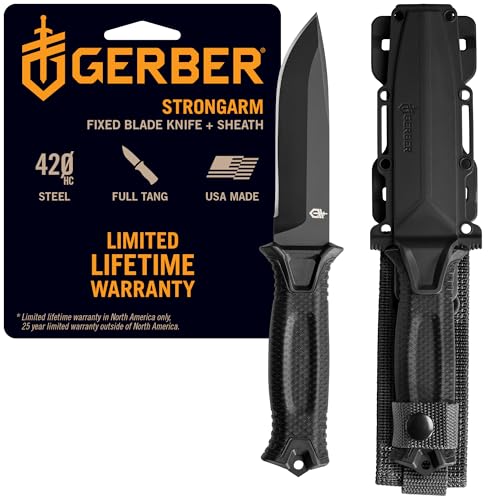
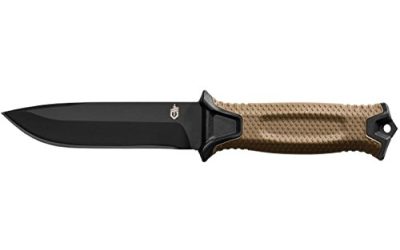
Gerber StrongArm Black, Plain Edge
- Best for: Survival kits and pack carry where a compact, secure-grip fixed blade earns its place.
- Blade: 4.8-inch 420HC steel drop point, plain edge
- Construction: Full tang
- Handle: Rubberized diamond-texture grip
- Sheath: MOLLE-compatible, included
Survival kits and pack carry where a compact, secure-grip fixed blade earns its place.
The short blade is not built for chopping or batoning, and the rubber grip can hold dirt and grit after muddy work.
The Gerber StrongArm is a compact fixed blade built for survival kits, packs, and tactical carry. Its 4.8-inch drop point blade in 420HC steel is full tang, with a ceramic coating that resists corrosion, and the rubberized diamond-texture grip stays secure in wet conditions. A striking pommel adds a tool for breaking glass or hammering in a pinch, and the MOLLE-compatible sheath mounts to a pack or vest in several positions. Both the knife and the sheath are made in the United States. It is the smallest blade in this guide, and the easiest to carry every day on the trail.
Watch out for: The short blade is not built for chopping or batoning, and the rubber grip can hold dirt and grit after muddy work.
Ontario RAT-7
- Best for: Bushcraft, survival training, and heavy camp work where a long, tough blade matters.
- Blade: 7-inch 1095 carbon steel drop point
- Blade thickness: 0.14 inch
- Hardness: 55-57 HRC
- Handle: Tan Micarta, 5 inches
Bushcraft, survival training, and heavy camp work where a long, tough blade matters.
The 1095 carbon steel blade needs drying and oiling after use, and the coating wears with hard use.
The Ontario RAT-7 is a full-size survival and bushcraft knife designed with the Randall’s Adventure and Training team and built by Ontario Knife Company in the United States. Its 7-inch drop point blade in 1095 carbon steel is thick enough for batoning and chopping, with a full tang and an extended pommel for leverage. Tan Micarta scales give a secure grip with or without gloves, and the sheath carries a gear pouch for small essentials. It is the heaviest knife in this guide, and the one to pick when the work is hard and the conditions are rough.
Watch out for: The 1095 carbon steel blade needs drying and oiling after use, and the coating wears with hard use.
Which One Fits Your Situation
Hunting and Field Dressing
The Buck 119 is the pick here. Its 6-inch clip point reaches into tight spots, the stainless blade wipes clean, and the leather sheath rides quietly on a belt. It has dressed game for generations of hunters, and it does camp chores just as well. For a hunter who wants one knife for the field and the camp, this is the straightforward choice.
Survival Kit and Pack Carry
The Gerber StrongArm is the pick here. It is compact, light for a fixed blade, and the MOLLE sheath mounts to almost any pack. The grippy handle and striking pommel cover the jobs a survival knife actually faces. It takes up little space in a kit, yet it handles cutting, prying, and fire prep when conditions turn rough.
Bushcraft and Heavy Cutting
The Ontario RAT-7 is the pick here. The long 1095 blade batons and chops, the Micarta handle stays secure with gloves, and the gear pouch keeps a sharpener close. Accept the weight and the upkeep, and it handles the hardest work. It suits extended trips and training courses where the knife is a primary tool, not a backup.
A First American-Made Fixed Blade
If this is your first fixed blade, begin with the Buck 119. It is the easiest of the three to live with: stainless steel asks little care, the size suits most hands, and the classic pattern holds its value as a tool you will keep. You get a proven pattern, simple upkeep, and a knife that covers hunting, camp, and general outdoor work.
Common Mistakes
- Picking a blade by length alone, without thinking about the work the knife will actually do most days.
- Putting a carbon steel blade away damp and finding rust on the edge the next time it comes out.
- Judging a knife by its looks instead of how the handle fits your hand with gloves on.
- Assuming every knife from an American brand is made in the United States — check the country of origin on the listing before buying.
- Carrying a fixed blade without checking local rules on blade length and carry.
Frequently Asked Questions
Are all three knives in this guide really made in the USA?
Yes. Each listing states that the knife is made in the United States: the Buck 119 is built by Buck in Post Falls, Idaho; the Gerber StrongArm knife and sheath are both made in the United States; and the Ontario RAT-7 is built by Ontario Knife Company in the United States. Some American brands also make models abroad, so always check the country of origin on the listing itself.
Which blade steel is better, 1095 carbon steel or 420HC stainless?
It depends on how you use the knife. The 1095 steel on the Ontario RAT-7 takes a very keen edge and sharpens easily, but it rusts if left damp and needs oiling. The 420HC stainless on the Buck and Gerber resists rust and needs less care, but it dulls sooner under hard use. Pick carbon steel for easy sharpening and stainless for low maintenance.
Can I carry a fixed blade knife every day?
That depends on where you live. Fixed blade carry rules vary by state and locality, and some places limit blade length or ban open carry of fixed blades. Check the rules for your state and any place you travel before carrying. A sheath is essential: never carry a fixed blade loose in a pocket or bag.
How do I keep a carbon steel blade from rusting?
Dry the blade fully after every use, especially after contact with water, sap, or game. Wipe on a light coat of oil before storage, keep the knife in a dry place, and make sure the sheath is dry too, since a damp sheath can hold moisture against the steel. A quick wipe after use prevents most rust.
More from Amazon
Programs that pair well with the guide above. Offers and eligibility are set by Amazon and may change.
Set up recurring deliveries of everyday items on eligible products. Terms and savings are set by Amazon.
Explore Subscribe & SaveCollect the home and kitchen items you want in one registry that guests can shop from.
Create a wedding registryFree shipping on eligible items, Prime Video and more. Eligible new members can start with a free trial.
Start a Prime free trialAudiobooks and podcasts to listen to on the go. Eligible new members can start with a free trial.
Try Audible freeAs an Amazon Associate we earn from qualifying purchases.
Write Your Review
No reviews yet. Be the first to share your experience!