
Our Short List of 3
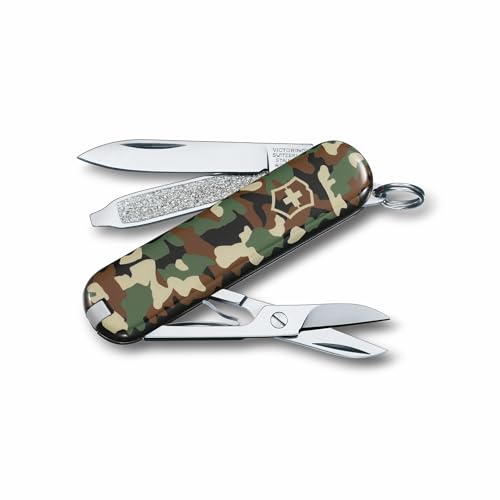
- Best for: Anyone who wants a tiny multi-tool on their keys that handles daily tasks beyond cutting.
- 7 functions: small blade, scissors, nail file, screwdriver, key ring, tweezers, toothpick
- Measures 58 mm long, 18 mm wide, 9 mm high
- Weight 21 g
- Stainless steel tools with ABS scales

- Best for: A budget keychain folder that opens boxes and bottles with one hand.
- 1.4-inch 3Cr13 stainless steel drop point blade with stonewashed finish
- 4-inch open length, keychain-ready
- Glass-filled nylon handle
- Liner lock
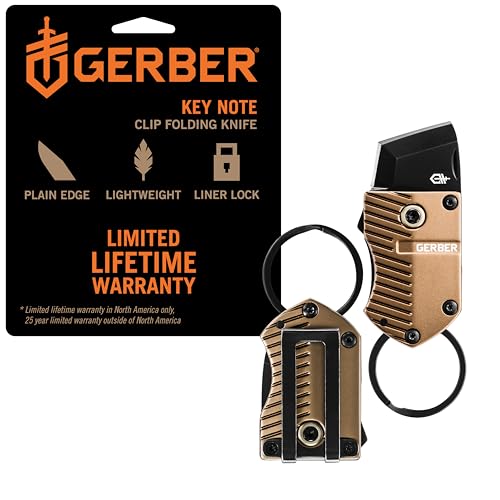
- Best for: A tiny folding blade that also scrapes labels and stickers off surfaces.
- 1-inch plain edge blade
- 3.8 inches long when open
- Aluminum handle
- 5Cr steel blade
All 3 Picks at a Glance
| Product | Specs | Action |
|---|---|---|
| Victorinox Classic SD |
| Check price on Amazon |
| Kershaw Cinder |
| Check price on Amazon |
| Gerber Key Note |
| Check price on Amazon |
Key takeaways
- Find the best knife keychain for your keys: three tiny folding blades and multi-tools that open packages, cut cord and disappear in a pocket until needed.
A keychain knife is the smallest useful blade you can carry, and that is exactly the point. It lives on the same ring as your house and car keys, so it is there when a box needs opening, a tag needs cutting or a loose thread needs trimming, without a pocket clip, a sheath or a second thought. The best ones open with one hand, lock safely, and weigh so little that you forget they are on the ring until you need them.
This guide is for everyday carry fans who want a real blade on their keys, kitchen and workshop users who open packaging all day, and anyone who wants a backup cutting tool that never gets left behind. The three knives below were chosen from the names and specifications on their Amazon pages, and each one is a true keychain-sized folder or multi-tool with a blade under two inches, so you can compare them on size, lock and extra tools rather than on size alone.
Quick Picks
As an Amazon Associate we earn from qualifying purchases
| Product | Best for | Key spec from title |
|---|---|---|
| Victorinox Classic SD | Everyday multi-tool on a key ring | Compact, 7 functions, Swiss made |
| Kershaw Cinder | Budget keychain folder with bottle opener | 1.4-inch drop point blade |
| Gerber Key Note | Tiny folding blade with scraping edge | 1-inch plain edge mini pocket knife |
How to Choose
Keep the blade short and the knife light
A keychain knife earns its place by disappearing, so blade length and weight matter more than steel type. Blades of one to two inches handle boxes, tape, cord and food packaging, and anything longer starts to feel bulky on a ring that already holds keys. Weight under one ounce is ideal, and even two ounces is acceptable if the knife also replaces a bottle opener or scissors on the same ring. Check the closed length too, since a knife that folds to under three inches sits flat in a pocket, while a longer one digs into your leg when you sit down.
Choose a lock you trust with your fingers
A folding keychain knife lives loose among metal keys, so the lock is a safety feature, not a luxury. A liner lock holds the blade open with a spring bar you press to close, and it is the most common lock on small folders. A slip-joint, like the one on a Swiss Army knife, holds the blade open with spring pressure but does not lock, so it is safer for light cutting and less suited to hard push cuts. Whichever lock you choose, test that the blade stays shut in your pocket and opens only when you mean it to, and keep the knife clean so grit cannot jam the mechanism.
Decide whether you want extra tools
Some keychain knives are a blade and nothing else, while others pack scissors, a screwdriver, tweezers and a toothpick into the same small body. Extra tools are worth the weight when you actually use them, since a Swiss Army knife can replace a whole pocketful of gadgets for daily tasks. A bottle opener built into the handle end is the most used extra tool on a keychain knife, and a small screwdriver earns its keep on glasses, battery covers and phone SIM trays. If you only ever cut things, a single-blade folder is lighter and simpler, and there is no reason to carry tools you never open.
Check local rules before you carry
Knife laws vary by city, state and country, and a keychain knife is still a knife in the eyes of the law. Some places limit blade length, ban locking blades, or restrict carrying a knife in schools, government buildings and airports, and a keychain knife on your keys can be easy to forget when you travel. Read the rules where you live and where you travel, keep the blade short and non-threatening, and never carry a keychain knife into a place that bans blades. The knives in this guide are all small and discreet, which helps, but the responsibility to carry legally is yours.
The 3 Best Options
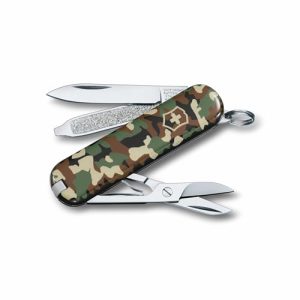
Victorinox Classic SD
- Best for: Anyone who wants a tiny multi-tool on their keys that handles daily tasks beyond cutting.
- 7 functions: small blade, scissors, nail file, screwdriver, key ring, tweezers, toothpick
- Measures 58 mm long, 18 mm wide, 9 mm high
- Weight 21 g
- Stainless steel tools with ABS scales
Anyone who wants a tiny multi-tool on their keys that handles daily tasks beyond cutting.
The blade is small and non-locking, so it is for light cutting only and not for heavy-duty work.
The Classic SD is the keychain knife that everything else is measured against, and it has stayed in production for decades because the formula works. Seven functions fit into a body just 2.3 inches long and 21 grams in weight: a small blade, scissors, a nail file with a 2.5 mm screwdriver tip, a key ring, tweezers and a toothpick. The stainless steel tools hold an edge well, the ABS scales come in many colours, and the knife is Swiss made and backed by a lifetime warranty, so it is a tool you buy once and carry for years.
Watch out for: The blade is small and non-locking, so it is for light cutting only and not for heavy-duty work.
Kershaw Cinder
- Best for: A budget keychain folder that opens boxes and bottles with one hand.
- 1.4-inch 3Cr13 stainless steel drop point blade with stonewashed finish
- 4-inch open length, keychain-ready
- Glass-filled nylon handle
- Liner lock
A budget keychain folder that opens boxes and bottles with one hand.
The 3Cr13 blade steel needs more frequent sharpening than premium steels, so keep a sharpener handy.
The Cinder is the budget pick that punches above its size, designed by bladesmith Rick Hinderer as a keychain accessory you can carry almost anywhere. Its 1.4-inch 3Cr13 stainless steel drop point blade opens with a thumb stud for one-handed use, and the glass-filled nylon handle ends in a bottle opener, so the knife earns its place on the ring twice over. At 4 inches open and under an ounce in weight, it is small enough to disappear among your keys, and the liner lock keeps the blade secure while you cut.
Watch out for: The 3Cr13 blade steel needs more frequent sharpening than premium steels, so keep a sharpener handy.
Gerber Key Note
- Best for: A tiny folding blade that also scrapes labels and stickers off surfaces.
- 1-inch plain edge blade
- 3.8 inches long when open
- Aluminum handle
- 5Cr steel blade
A tiny folding blade that also scrapes labels and stickers off surfaces.
The 1-inch blade is too short for larger cutting jobs, so treat it as a precision tool, not a general knife.
The Key Note is the smallest real folding knife in this guide, built around a 1-inch blade that is broad enough to scrape as well as cut. The short, wide blade opens with a finger flick or a nail nick, locks with a liner lock, and the aluminum handle keeps the whole knife at just 3.8 inches long when open. A scraping edge on the blade spine handles labels, stickers and paint, which is the second job the Key Note was designed for, and the knife is small enough to ride on a key ring without changing how the ring feels in your pocket.
Watch out for: The 1-inch blade is too short for larger cutting jobs, so treat it as a precision tool, not a general knife.
Which One Fits Your Situation
You want one tool that does everything
Choose the Victorinox Classic SD. Its scissors, screwdriver, tweezers and toothpick cover the small jobs that come up every day, and the blade handles cutting when you need it. At 21 grams it is the lightest multi-tool in this guide, and the lifetime warranty means you buy it once and carry it for years to come.
You want the best value for money
Choose the Kershaw Cinder. It is a proper one-handed folding knife with a locking blade and a bottle opener, designed by a respected bladesmith, and it costs less than most keychain gadgets. The 1.4-inch blade is the longest in this guide, so it handles bigger boxes and thicker cord. Keep a small sharpener in your pocket, since the budget steel needs touching up more often.
You want the smallest knife possible
Choose the Gerber Key Note. Its 1-inch blade and 3.8-inch open length make it the most discreet folder here, and the broad blade doubles as a scraper for labels and stickers. It is the right pick when the knife must vanish on the ring and only appear for small, precise cuts. The broad blade also works as a scraper, so it earns its place twice over.
You open packages all day
Choose the Kershaw Cinder or the Victorinox Classic SD. The Cinder’s one-handed thumb-stud opening is fastest when your other hand holds the box, while the Classic SD’s scissors cut tape and thread without opening the blade at all. Either one beats digging for a full-size knife when the box is already in your hands at work.
Common Mistakes
- Buying a keychain knife with a blade over two inches, which turns a discreet tool into a bulky lump on the ring that pulls your keys down.
- Ignoring the lock type and carrying a knife that can open loose in a pocket among metal keys.
- Choosing a single-blade folder when you actually need scissors and a screwdriver every day.
- Forgetting to check local knife rules before travelling with a keychain knife on your keys.
- Letting a small blade go dull, since a blunt keychain knife is more dangerous than a sharp one because it slips instead of cutting.
Frequently Asked Questions
Is a keychain knife legal to carry?
It depends on where you live, since knife laws vary by city, state and country. Most places allow small folding blades under two inches, but some restrict locking blades or carrying knives in schools and government buildings. Check the rules where you live and where you travel, and keep the blade short and discreet.
What is the best blade length for a keychain knife?
One to two inches is the sweet spot for a keychain knife. A 1-inch blade handles precision cuts and package opening, while a 1.4-inch blade like the Cinder’s covers thicker cord and bigger boxes. Longer blades add bulk without adding much usefulness on a key ring.
Can a keychain knife replace a full-size pocket knife?
No, and it should not try to. A keychain knife is a backup tool for light, everyday cutting, while a full-size pocket knife handles harder jobs with a longer blade and a stronger grip. Carry the keychain knife for convenience and the full-size knife when you know you will need it.
How do I keep a keychain knife sharp?
Use a small ceramic sharpener or a fine sharpening stone, and touch up the edge often rather than waiting until it is dull. Small blades sharpen quickly because there is less steel to work, and a few strokes after heavy use keep the edge ready. Clean grit from the pivot so the lock works smoothly.
More from Amazon
Programs that pair well with the guide above. Offers and eligibility are set by Amazon and may change.
Set up recurring deliveries of everyday items on eligible products. Terms and savings are set by Amazon.
Explore Subscribe & SaveCollect the home and kitchen items you want in one registry that guests can shop from.
Create a wedding registryFree shipping on eligible items, Prime Video and more. Eligible new members can start with a free trial.
Start a Prime free trialAudiobooks and podcasts to listen to on the go. Eligible new members can start with a free trial.
Try Audible freeAs an Amazon Associate we earn from qualifying purchases.
Write Your Review
No reviews yet. Be the first to share your experience!