
Key takeaways
- A plain-language guide to the BPS Raven fixed blade: its stainless steel, Scandi grind, plastic handle and Kydex sheath, and who it suits.
As an Amazon Associate we earn from qualifying purchases.
The BPS Raven raises a simple decision that most fixed-blade listings blur: do you want a bushcraft knife built around stainless steel and a synthetic sheath, or the more traditional carbon steel and leather combination that BPS Knives is usually known for? The Raven takes the first path, and that single choice changes how the knife handles wet weather, how often it needs oiling, and how it carries on a belt.
This guide is for campers, bushcraft learners, and general outdoor users who have seen the Raven mentioned alongside the better-known BPS Adventurer and want to understand where the two designs actually differ. It explains the blade, the handle, the sheath, and the maintenance routine in plain terms, so you can judge the design on its specification rather than on its looks.
How the Raven Is Built
Blade shape and grind
The Raven uses a drop-point blade with a Scandi grind, a pairing aimed squarely at wood work. A drop point keeps the tip strong and centred, which helps when you are drilling a bow-drill divot, notching a tent peg, or trimming the end of a cord. The Scandi grind runs a single wide bevel down to the edge, so the blade tends to track straight in timber instead of wandering. That same bevel makes field sharpening simpler, because you lay the flat of the bevel on a stone and follow it, rather than hunting for a narrow secondary angle. The trade-off is that a Scandi edge is less suited to slicing food thinly, since the bevel shoulders can push material apart as the cut deepens.
Steel choice and what it means
Where the Adventurer uses carbon steel, the Raven uses 5Cr14MoV stainless steel. Stainless matters most for people who camp near the coast, cook with their knife, or store a blade in a damp pack between trips, because the blade resists the surface rust that carbon steel develops quickly when it is put away wet. The compromise is edge behaviour: this grade of stainless is comparatively soft, so the edge rolls or dulls sooner under hard batoning than a harder carbon blade, but it also comes back quickly on a basic stone or strop. If your routine is weekend trips with regular, light maintenance, stainless is the calmer ownership experience. If you enjoy oiling a blade after every outing, carbon steel remains a valid alternative in the wider BPS range.
Handle design
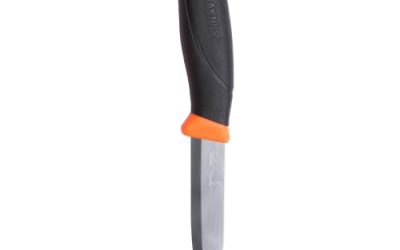
Instead of the walnut scales fitted to many BPS models, the Raven has a black plastic handle with shaped finger grooves along its belly. Grooves divide opinion, and here they are the point of the design: they index your grip quickly when you pick the knife up in gloves or in low light, and the synthetic material does not swell, crack, or absorb water the way wood can. The tang extends visibly past the end of the handle, which confirms the full-tang construction and gives a solid striking point at the butt. The risk with any grooved handle is fit. Hands that fall between the grooves can feel crowded, so grip comfort on this model depends more on hand size than it does on a smooth wooden handle.
Sheath and carry
The Raven ships with a Kydex-style plastic sheath rather than the leather sheath supplied with most BPS knives. A hard plastic sheath sheds water, keeps its shape when it is packed under other gear, and usually offers firmer retention, so the knife stays put when a belt bounces over rough ground. It also suits wet-weather carry, because it does not hold moisture against the blade the way leather can. The downsides are noise and feel: hard sheaths can rattle slightly and look more tactical than traditional. Before buying, check how the sheath attaches to a belt, because carry method matters as much as retention if you plan to wear the knife all day.
Size, weight, and balance
Published descriptions put the Raven at roughly ten inches overall, with a blade a little over five inches and a handle just under five inches, and a weight that stays moderate thanks to the plastic handle. Those proportions place it in the middle of the bushcraft class: large enough to process kindling and prepare food, small enough to ride on a belt all day without becoming a nuisance. Balance falls close to the handle, which favours controlled carving over chopping momentum. Buyers comparing it with the Adventurer should expect a very similar footprint, because the Raven is a materials variation on a proven size rather than a new category of knife.
Using the Raven Day to Day
Wood processing and camp tasks
The Raven is sized and shaped for the ordinary work of a camp rather than for extreme survival tasks. Feather sticks, tent pegs, cord cutting, debarking, and food preparation around a fire all sit comfortably within a blade of this length. The squared spine is worth noting, because a sharp ninety-degree spine can strike sparks from a ferro rod, which removes the need to use the edge for that job. Batoning is possible with a full-tang blade, but it should stay within sensible limits: split kindling and wrist-thick rounds, not seasoned logs, and stop if the tip or edge starts to suffer.
Food preparation at camp
A stainless blade is a practical choice if one knife covers both wood work and cooking, because it will not react with acidic foods or leave the maintenance demands that carbon steel brings to a food role. The Scandi bevel is the limiting factor here rather than the steel. It handles root vegetables, bread, cheese, and cooked meat without trouble, but it is not the tool for paper-thin slices of tomato or onion. Campers who cook seriously often pair a knife like this with a small folding food knife, and that pairing is more honest than expecting one bushcraft blade to do everything well.
Maintenance routine
Ownership is straightforward. Wash and dry the blade after use, especially after food preparation, and store the knife dry even though the steel is stainless, because stainless resists rust rather than ignoring it entirely. Touch the edge up little and often: a few passes on a fine stone or a loaded strop after a trip keeps a Scandi edge cutting cleanly, and it is far easier than restoring a neglected edge later. Check the sheath for grit before re-sheathing, since trapped grit dragged along the flat of the blade is a common cause of scratches and dull spots on any fixed blade. Once a season, inspect the handle screws and the edge under good light, because small problems caught early stay small on a simple fixed blade like this one.
Which One Fits Your Situation
You camp in wet or coastal conditions
Choose the Raven’s formula of stainless steel and a plastic sheath. Salt air, rain, and wet grass punish carbon steel and leather quickly, and a knife that can be wiped down and put away without an oiling routine fits trips where the weather does most of the deciding. The synthetic handle also avoids the swelling and drying cycle that wooden scales go through in repeated wet use.
You prefer traditional materials and easy sharpening
Look instead at the carbon steel and leather side of the BPS range, typified by the Adventurer. Carbon steel takes a keen Scandi edge, sharpens readily on simple stones, and throws strong sparks from a ferro rod. In exchange you accept a stricter routine: dry the blade after use, oil it for storage, and expect a patina to develop. Neither approach is wrong; they simply suit different habits.
You want one knife for camp chores and cooking
The Raven is a reasonable single-knife compromise, provided your cooking stays rustic. Its stainless blade removes worries about reactivity and rust during food prep, while the drop point and Scandi edge still cover wood tasks. If your camp menu leans on fine slicing, add a thin kitchen knife to the kit rather than forcing the bushcraft blade into a role its grind does not suit.
You have small or large hands
Handle fit should decide this one. The grooved plastic handle rewards hands that match its spacing and can feel awkward for hands that do not. If possible, judge the grip from the listed handle length and shape rather than from photographs, and be honest about whether you work in gloves, because gloves change effective hand size and can turn a snug grip into a cramped one.
Common Mistakes
- Assuming stainless steel means no maintenance at all, then storing the knife wet until spots appear on the blade.
- Batoning oversized, seasoned logs with a bushcraft blade and blaming the edge when the task was beyond its size.
- Buying a grooved handle without thinking about hand size or glove use, then finding the grip indexes in the wrong places.
- Leaving grit inside a hard sheath, which scratches the blade flat every time the knife is drawn and replaced.
- Expecting a Scandi grind to slice food like a thin kitchen knife, instead of pairing it with a suitable food blade.
Frequently Asked Questions
Is the BPS Raven a full-tang knife?
Yes. The design is a full-tang fixed blade, and the tang extends visibly beyond the end of the handle scales. Full-tang construction means the blade steel runs the complete length of the handle, which is the arrangement most buyers want for batoning and other camp work where a hidden or partial tang would be a weak point.
How does the Raven differ from the BPS Adventurer?
The two knives are close in size and share the same bushcraft intent, but the materials differ. The Raven uses stainless steel, a shaped plastic handle, and a hard plastic sheath. The Adventurer uses carbon steel, a walnut handle, and a leather sheath. Your climate and your maintenance habits are the most useful way to choose between them.
Does a Scandi grind need special sharpening tools?
No. A Scandi edge is one of the simpler grinds to maintain, because the wide bevel sits flat on a sharpening stone and guides itself. A medium and fine water stone or a simple two-sided field stone covers most needs, finished with a strop if you use one. Work little and often rather than letting the edge become very dull.
Can the Raven be used for food preparation?
It can, with limits. The stainless blade is well suited to camp cooking because it resists rust and does not react with acidic ingredients. The thick Scandi bevel, however, wedges in dense vegetables and is not built for fine slicing. It handles hearty camp food well; dedicated kitchen tasks are better served by a thinner blade.
More from Amazon
Programs that pair well with the guide above. Offers and eligibility are set by Amazon and may change.
Set up recurring deliveries of everyday items on eligible products. Terms and savings are set by Amazon.
Explore Subscribe & SaveCollect the home and kitchen items you want in one registry that guests can shop from.
Create a wedding registryFree shipping on eligible items, Prime Video and more. Eligible new members can start with a free trial.
Start a Prime free trialAudiobooks and podcasts to listen to on the go. Eligible new members can start with a free trial.
Try Audible freeAs an Amazon Associate we earn from qualifying purchases.
Write Your Review
No reviews yet. Be the first to share your experience!