

Best Pie Server for Baking Enthusiasts
The best pie server for baking enthusiasts is a medium-length stainless-steel server with a thin, stiff triangular blade, fine serrations on at least one edge, and a comfortable non-slip handle; for most kitchens, the OXO Good Grips Stainless Steel Pie Server is the safest all-purpose choice.
It is more versatile than a completely flat cake server because it can slide under flaky crust, cut through a firm base, and lift a slice without excessive bending. However, the right design depends on whether you usually serve delicate fruit pies, dense quiche, frozen desserts, or neat slices at frequent gatherings.
Our top picks
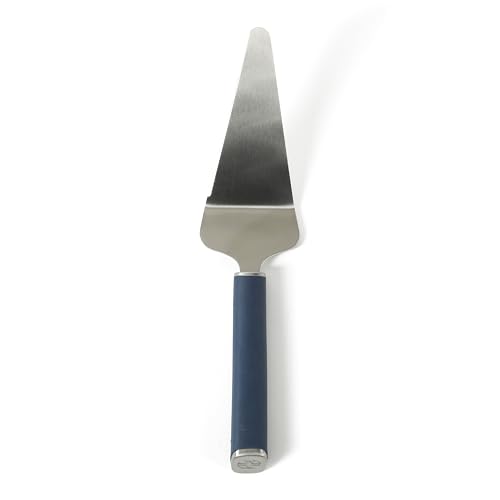 Calphalon Edge Pie Server
- One angled stainless steel pie server for lifting…
- Ergonomically shaped for a comfortable, controlled grip that…
- Durable stainless steel resists rust, dulling, and daily…
 Calphalon Prime Pie Server
- Shaped for a confident, comfortable grip that reduces…
- Built to resist rust, bending, and everyday wear…
- Slides cleanly under each slice from crust to…
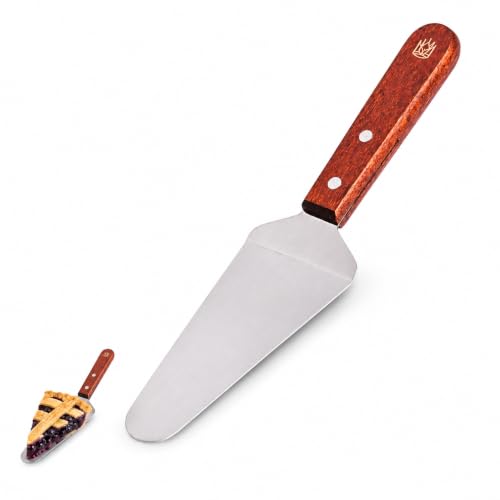 King Arthur Baking Company Offset Pie Server
- King Arthur Baking Company Offset Pie Server: lifts…
- Materials And Size: made from durable stainless steel…
- Smooth Tapered Blade: tapered stainless steel blade slides…
| Product | Key specs | |
|---|---|---|
| Calphalon Edge Pie Server | One angled stainless steel pie server for lifting… Ergonomically shaped for a comfortable, controlled grip that… Durable stainless steel resists rust, dulling, and daily… | Check price |
| Calphalon Prime Pie Server | Shaped for a confident, comfortable grip that reduces… Built to resist rust, bending, and everyday wear… Slides cleanly under each slice from crust to… | Check price |
| King Arthur Baking Company Offset Pie Server | King Arthur Baking Company Offset Pie Server: lifts… Materials And Size: made from durable stainless steel… Smooth Tapered Blade: tapered stainless steel blade slides… | Check price |
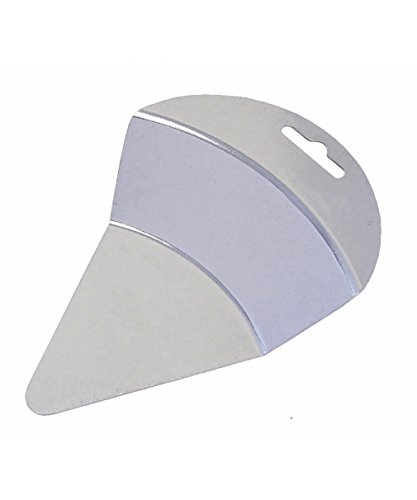 R&M First Slice Pie Spatula R&M First Slice Pie Spatula | Designed to help remove that difficult first slice… Place the pie spatula directly in the pie… 4.5-INCH RADIUS SLICE: Features a 4.5-inch radius slice… | Check price |
As an Amazon Associate we earn from qualifying purchases at no extra cost to you.
What to look for in a pie server
Blade shape: triangular versus broad and square
A tapered triangular blade is the most useful shape for standard 9-inch pies. Its pointed end enters the cut line easily, while the wider rear supports the slice as it leaves the dish. This shape works particularly well for apple, cherry, pumpkin, and custard pies.
A broad, square-ended blade provides more support for large or heavy portions, but it can be awkward when the first slice is difficult to remove. A narrow blade is nimble but may let a soft filling slump over the sides. For general baking, look for a blade approximately 2.5 to 3 inches wide at the back and 5 to 6 inches long.
Serrated edges help with crust, not filling
Fine serrations are useful when a pie has a crisp pastry base or a browned top crust. They let the server finish a cut with a gentle sawing motion instead of forcing the blade downward and crushing the filling. Coarse teeth can snag flaky pastry, so fine, shallow serrations are preferable.
A fully smooth edge is easier to wipe clean and is adequate for soft pies, cheesecake, and many no-bake desserts. If you want one tool for the widest range of pies, choose a server with one serrated edge and one smooth edge, or a fine-serrated edge that is not aggressively sharp.
Stiffness matters more than apparent sharpness
A pie server should flex slightly under pressure but return to shape immediately. Excessive flexibility makes it difficult to support a warm fruit slice, especially when the crust is heavy. Very thin stamped metal may look elegant but can bend permanently if used to pry a slice from a cold pie.
Look for stainless steel with a reinforced neck or a blade that continues securely into the handle. A rigid blade is especially important for quiche, pecan pie, deep-dish fruit pie, and chilled cheesecake. For delicate cream pies, moderate stiffness combined with a broad blade is usually better than a razor-thin edge.
Head-to-head comparison of useful pie-server types
| Server type | Typical blade size | Best for | Main limitation | Typical market range |
|---|---|---|---|---|
| Fine-serrated stainless steel | 5–6 in. long, 2.5–3 in. wide | Mixed use, crisp crusts, fruit pies | May catch on very flaky pastry | $10–$30 |
| Smooth stainless steel | 5–6 in. long, 2.5–3 in. wide | Custard, cream pie, cheesecake | Less effective on firm crust | $8–$25 |
| Wide, rigid server | 4.5–5.5 in. long, 3–3.5 in. wide | Deep-dish and heavy slices | Less precise for small portions | $12–$35 |
| Flexible cake-and-pie server | 5–6 in. long, 2–3 in. wide | Soft cakes and delicate chilled desserts | Can buckle under a dense pie | $8–$25 |
| One-piece stainless steel | 5–6 in. long, 2.5–3 in. wide | Frequent use and easy cleaning | Usually less cushioned in the hand | $10–$40 |
Best picks by baking situation
Best all-purpose choice: OXO Good Grips Stainless Steel Pie Server
The OXO Good Grips Stainless Steel Pie Server is a strong default for home bakers who want one tool rather than a collection of specialized servers. Its stainless-steel blade is designed for regular dessert service, while the cushioned, contoured handle offers better control than a thin metal handle when lifting a warm or heavy slice.
Choose it if your pies range from pumpkin and pecan to apple and cheesecake. The soft-grip handle is also useful for people who dislike the cold feel of bare metal. Check the product packaging for the current cleaning instructions, as dishwasher guidance can vary by version and retailer.
Best for a traditional all-metal design: Ateco stainless-steel pie server
Ateco makes professional-style pastry tools, including stainless-steel pie servers with simple, functional construction. An all-metal server is a good choice for frequent bakers who prioritize stiffness, longevity, and a slim profile over cushioned ergonomics.
The main trade-off is grip comfort. Bare metal can feel slippery if your hands are wet or greasy, and it becomes cold when stored in a cool kitchen. An Ateco-style server suits people who prefer a tool that can be washed quickly and stored in a utensil crock without worrying about a separate handle material.
Best budget category: a fine-serrated stainless-steel server
For occasional bakers, a generic fine-serrated stainless-steel server in the $10–$20 range can perform nearly as well as a premium model if the blade is stiff and the handle-to-blade joint is secure. Inspect the edge for evenly spaced teeth, flex the blade gently before buying, and avoid any handle that rattles.
At this price, the most common compromise is a thinner handle or a less polished finish, not necessarily poor serving performance. A simple one-piece construction is often more durable than a decorative server with glued or loosely fitted components.
Decision matrix: match the server to your kitchen
| Your situation | Recommended design | Why |
|---|---|---|
| Beginner baking one or two pies a month | $10–$20 fine-serrated stainless steel | Covers most crust and filling types without overbuying |
| Frequent baker making deep or dense pies | Rigid blade, reinforced neck, broad rear | Prevents bending while supporting heavy portions |
| Mostly cream pie and cheesecake | Smooth, broad blade with moderate stiffness | Slides beneath soft filling with less snagging |
| Small kitchen with limited drawer space | One-piece server under 11 inches overall | Stores easily and avoids a separate pie knife |
| Serving large holiday meals | Wide blade and non-slip handle | Improves control when lifting larger portions repeatedly |
Handle materials, grip, and dishwasher safety
Stainless steel handles are durable, slim, and usually easy to clean. They are a sensible choice for a server that will live in a utensil holder or be used in a commercial-style kitchen. The downside is reduced comfort during repeated serving.
Soft-touch silicone or rubberized handles provide the best grip, particularly when the server is used with warm, buttery pastry. They can, however, show wear sooner than the blade. Look for a handle that is molded around the tang rather than attached with a visible seam that can trap crumbs.
Plastic handles can be comfortable and inexpensive, but heat, harsh detergents, and repeated dishwasher cycles may cause fading, cracking, or loosening. Wood handles look attractive but generally require hand washing and thorough drying. They are not the best choice if dishwasher convenience is a priority.
Dishwasher-safe stainless steel is usually the easiest ownership option. Place a handled server so that its grip does not contact an exposed heating element, and follow the manufacturer’s instructions. Even when a server is dishwasher-safe, hand washing can preserve a soft-touch finish and reduce dulling or spotting.
How to get cleaner slices with any server
- Let fruit pies rest for at least 2 hours when possible; a filling that is too hot will slide regardless of blade quality.
- Use a separate pie knife to complete the cut if the server is not designed for cutting. Do not twist the blade sideways to force through a thick crust.
- Slide the pointed end fully beneath the slice before lifting. Stopping halfway leaves the back of the portion unsupported.
- For chilled cheesecake or cream pie, wipe the blade between slices to prevent filling from building up on the underside.
- Lift vertically first, then angle toward the plate. Dragging sideways is the fastest way to break a delicate crust.
Durability and ownership realities
The blade edge and the handle joint usually show wear before the stainless-steel body does. Serrations can become less distinct after years of abrasive cleaning, while a rubberized grip may harden or peel. Bent blades should not be repeatedly straightened; the metal can weaken at the neck and eventually crack.
One practical value calculation favors a durable server. A $25 tool used once a month for five years costs about 42 cents per use. A $12 tool replaced every year costs approximately $1 per use over the same period, before accounting for the inconvenience of a loose handle or bent blade.
For most baking enthusiasts, choose a fine-serrated stainless-steel server with a stiff 5- to 6-inch blade and a secure, non-slip handle. Select the OXO Good Grips model when comfort and all-purpose performance matter most; choose an all-metal Ateco-style server when maximum simplicity and long-term durability matter more than cushioning.








Write Your Review
No reviews yet. Be the first to share your experience!