

The best trolling motors are chosen by thrust and shaft length first, then by battery system, mounting style, and control features: a small freshwater bass boat may suit a 55 lb, 12-volt bow motor, while a heavy aluminum boat, deep hull, or strong current usually needs 80–112 lb and 24 or 36 volts.
Our top picks
 Newport NV-Series 55lb Thrust Saltwater Transom Mounted
- Efficient Power: 55Lb Thrust - This 12V Electric…
- Features: This Motor Features A 30 Inch Shaft,…
- Speed: This Motor Has 8 Speeds, 5 Forward…
 Minn Kota Endura C2 Transom-Mount Electric Trolling
- Telescoping Tiller: This 6-inch telescoping tiller provides easy,…
- 10-Position Lever Lock Bracket: Easy-release lever lock system…
- Power Prop for Heavy Vegetation: Designed for 3-1/4"…
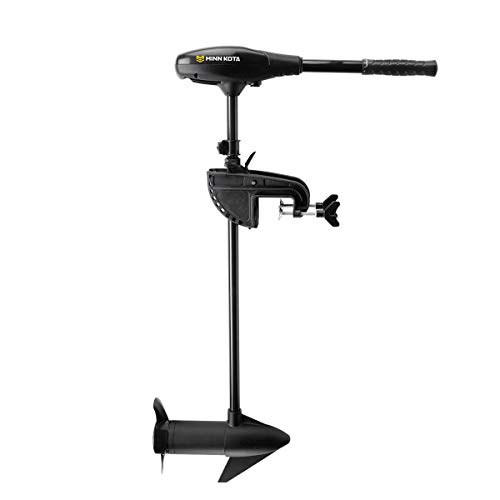 Minn Kota Endura Max Transom-Mount Electric Trolling
- Six-Inch Telescoping Tiller: Provides easy, comfortable, and intuitive…
- 10-Position Lever Lock Bracket: Easy-release lever lock system…
- Power Prop for Heavy Vegetation: Designed for 3-1/4"…
| Product | Key specs | |
|---|---|---|
| Newport NV-Series 55lb Thrust Saltwater Transom Mounted | Efficient Power: 55Lb Thrust - This 12V Electric… Features: This Motor Features A 30 Inch Shaft,… Speed: This Motor Has 8 Speeds, 5 Forward… | Check price |
| Minn Kota Endura C2 Transom-Mount Electric Trolling | Telescoping Tiller: This 6-inch telescoping tiller provides easy,… 10-Position Lever Lock Bracket: Easy-release lever lock system… Power Prop for Heavy Vegetation: Designed for 3-1/4"… | Check price |
| Minn Kota Endura Max Transom-Mount Electric Trolling | Six-Inch Telescoping Tiller: Provides easy, comfortable, and intuitive… 10-Position Lever Lock Bracket: Easy-release lever lock system… Power Prop for Heavy Vegetation: Designed for 3-1/4"… | Check price |
 68LB Thrust Trolling Motor 8 Speed Electric 68LB Thrust Trolling Motor 8 Speed Electric | Motor for Reliable Thrust: This 68lb thrust trolling… Control & LED Monitoring: Operate your kayak motor… Compact & Versatile: Weighs approximately 20.72 lbs with… | Check price |
As an Amazon Associate we earn from qualifying purchases at no extra cost to you.
Quick picks by boat and fishing situation
| Situation | Recommended type | Useful specification | Why it fits |
|---|---|---|---|
| Small jon boat, canoe, or light skiff | Transom-mounted motor | 30–55 lb thrust; 12 volts; 30–36 inch shaft | Lower weight, simple installation, and modest battery demand |
| 16–18 ft freshwater bass or aluminum boat | Bow-mounted electric-steer motor | 55–80 lb thrust; 12 or 24 volts; 45–60 inch shaft | Better boat control and anchor-mode positioning |
| Large fiberglass boat, wind, or river current | Heavy-duty bow motor | 80–112 lb thrust; 24 or 36 volts; 60–72 inch shaft | More reserve power and improved control in difficult conditions |
| Frequent shallow-water fishing | Bow motor with lift-assist and sonar integration | 80–100 lb thrust; deployable transducer; 45–60 inch shaft | Fast repositioning without repeatedly starting the main engine |
| Occasional use and a tight budget | Transom or cable-steer motor | 40–55 lb thrust; 12 volts; tiller or foot control | Fewer electronics and lower ownership cost |
Best trolling motors by use case
Best all-around bow motor: Minn Kota Terrova
The Minn Kota Terrova is a strong choice for anglers who want GPS-based boat positioning without moving to the heavier, more aggressive foot-pedal feel of a tournament-oriented motor. It is sold in multiple thrust and shaft configurations, including 55, 80, and 112 lb versions, with 12-, 24-, and 36-volt systems depending on the model.
Terrova models are known for Spot-Lock, a deployable bow mount, i-Pilot or i-Pilot Link control on applicable versions, and compatibility with Minn Kota ecosystem accessories. Choose it when controlled drifting, repeatable fishing routes, and remote steering matter more than the lowest possible purchase price. Check the specific model before buying: thrust, voltage, sonar capability, and included networking features vary.
Best for a tournament-style foot pedal: Minn Kota Ultrex
The Ultrex combines cable-steer steering with GPS positioning. That gives experienced anglers a more immediate, forceful foot-pedal response than many fully electronic steering motors, while retaining features such as Spot-Lock on equipped models. It is available in high-thrust configurations, commonly 80 and 112 lb, with shaft lengths suited to larger freshwater boats.
Its disadvantages are weight, price, and installation complexity. The Ultrex is most appropriate when the motor is used on nearly every trip and precise bow control is worth carrying a substantial mount and battery system.
Best for integrated sonar and quiet operation: Lowrance Ghost
The Lowrance Ghost is a brushless bow-mounted motor designed for anglers already using compatible Lowrance electronics. Brushless construction can reduce electrical noise and improve efficiency compared with traditional brushed designs, while GPS anchoring and chartplotter integration make it useful for repeating a drift or holding on a productive waypoint.
Ghost models are offered in high-thrust, multi-voltage configurations, including versions rated around 97 lb at 24 volts and 120 lb at 36 volts. Confirm the exact shaft length and transducer arrangement because the right choice depends heavily on bow height and how much chop the boat encounters.
Best for offshore-capable bow mounting: Garmin Force Kraken
The Garmin Force Kraken suits anglers who want a long-shaft, brushless bow motor with Garmin chartplotter integration and wireless control options. Kraken versions are designed for demanding boats and can be configured with longer shafts than many compact freshwater motors, which is valuable when the bow sits high above the water or the boat is used in waves.
It is a particularly logical choice for Garmin electronics owners. The trade-offs are a substantial price, a larger installation footprint, and the need to plan battery capacity and wiring carefully. Saltwater use also makes rinsing and corrosion prevention essential.
Best simple alternative: MotorGuide Xi3 or Xi5
MotorGuide’s Xi3 and Xi5 families offer bow- and transom-mount options with wireless control on applicable models. They are worth considering when a buyer wants remote steering and GPS features but does not need the newest high-end sonar ecosystem. Available thrust and shaft lengths vary by configuration, so compare the individual model rather than the family name alone.
A cable-steer or basic tiller motor remains the better value for short trips, small boats, and anglers who do not need electronic anchoring. Simpler controls also mean fewer electronic components to troubleshoot.
How much thrust do you need?
Manufacturer thrust charts are starting points, not guarantees. Boat weight, hull shape, wind, current, vegetation, and whether the motor is used in freshwater or saltwater all affect performance. As a practical rule, allow roughly 2 lb of thrust for every 100 lb of loaded boat weight, then add reserve for wind, current, and heavy vegetation.
For example, suppose a boat, motor, batteries, fuel, tackle, and two anglers weigh 2,600 lb. The basic calculation is:
2,600 ÷ 100 × 2 = 52 lb of minimum thrust.
That points to a 55 lb motor in sheltered water. If the same boat regularly faces strong wind or river current, an 80 lb, 24-volt motor provides a more useful reserve. Do not assume that doubling thrust doubles speed; hull resistance limits top speed, while extra thrust mainly improves acceleration, maneuvering, and control in adverse conditions.
Shaft length is a fit measurement, not a performance upgrade
A shaft that is too short can lift the propeller out of the water whenever the bow rises, causing ventilation and inconsistent thrust. A shaft that is excessively long can strike the bottom, complicate stowage, and sit unnecessarily low in shallow water.
- Measure from the mounting surface to the waterline with typical passengers aboard.
- Add about 12 inches for calm freshwater use and more for rough water or a high bow.
- Many small transom boats work with approximately 30–36 inches.
- Common freshwater bow-mount choices are approximately 45, 52, 60, or 72 inches.
- When between sizes, favor the longer shaft if the boat operates in chop; verify that it can still stow safely.
Battery demands and running cost
Voltage determines how the batteries are arranged, not simply how powerful the motor feels. A 12-volt motor uses one 12-volt battery. A 24-volt system generally uses two matching 12-volt batteries in series, and a 36-volt system uses three. Series wiring increases voltage while keeping amp-hour capacity approximately equal to that of one battery in the series string.
A rough energy estimate helps compare systems. A 12-volt, 55 lb motor drawing 50 amps at a particular operating setting uses about 600 watts. A 100 amp-hour lead-acid battery contains roughly 1,200 watt-hours in theory, but routinely using only about half of that capacity is kinder to the battery. The practical estimate is therefore about 1,200 × 0.5 ÷ 600, or approximately one hour at that demanding setting.
Real runtime is often longer at cruising or intermittent power and shorter in wind, weeds, or current. Lithium batteries provide more usable capacity and lower weight, but cost more initially and require a compatible charger and battery-management system. Do not mix old and new batteries, different capacities, or different chemistries in one series bank.
Bow mount, transom mount, or hand control?
- Bow mount: Best for pulling the boat from the front, holding a casting position, and tracking a shoreline. It needs adequate bow space and a strong mounting surface.
- Transom mount: Easier to install and economical for small boats. It pushes from the rear, so it is less convenient for precise casting control but excellent for transportable boats.
- Cable steer: Immediate foot-pedal response and mechanical simplicity. It is favored by anglers who constantly adjust direction.
- Electric steer: Remote control, GPS anchoring, autopilot, and chartplotter integration. It offers more functions but adds electronics and potential repair costs.
- Hand or wireless control: A practical choice when the driver sits near the stern or when a full foot-pedal installation would consume valuable deck space.
Ownership details that affect the buying decision
The propeller is commonly the first part to suffer. Fishing line, weeds, and submerged wood can damage the prop, shear a pin, or load the motor. Carry a spare propeller and the correct hardware. After every trip, remove wrapped line and rinse saltwater-exposed parts with fresh water; salt deposits can attack connectors, shafts, mounts, and sacrificial hardware.
Keep battery terminals tight and protected, use the wire gauge specified by the manufacturer, and install the recommended circuit protection close to the battery. Undersized wiring creates voltage drop and heat, reducing thrust before the motor itself is at fault. Store the motor fully stowed and supported rather than allowing it to bounce on the mount during transport.
Final buying recommendation
Choose a 55 lb, 12-volt motor for a light boat in protected water, an 80 lb, 24-volt bow motor for many 16–18 ft fishing boats, and a 112–120 lb, 36-volt system when weight, wind, current, or frequent use justify the extra batteries. Then verify shaft length from the actual mounting height, select the control style you will use most, and match the electronics ecosystem to your existing fish finder. A simpler motor with the correct thrust and fit will outperform a feature-rich motor that is underpowered, too short, or burdened by an unsuitable battery bank.








Write Your Review
No reviews yet. Be the first to share your experience!