

Key takeaways
- Choosing by wattage alone. Gear design and bowl shape matter as much as the number.
- Overloading with stiff dough; run speed 2 and stop if the head strains.
- Ignoring bowl clearance. Adjust the beater height so it barely touches the bottom of the bowl.
- Putting the bowl or beaters in the dishwasher without checking whether they are coated; many dough hooks discolor.
The best stand mixer for most home bakers is the KitchenAid Artisan 5-quart tilt-head, which balances capacity, attachment options and a strong repair and accessory ecosystem. Serious bread bakers should look at the Bosch Universal Plus or a bowl-lift KitchenAid for heavier dough, while the Cuisinart Precision Master is a good value alternative. This guide compares seven current stand mixers by bowl size, motor power, dough capacity and trade-offs, then explains how to match one to what you bake. Specs come from the manufacturers’ published sheets; confirm the model year before buying.
Our top picks


As an Amazon Associate we earn from qualifying purchases at no extra cost to you.
Quick Comparison of the Best Stand Mixers for 2026
| Pick | Best for | Bowl | Motor (maker spec) | Style | Price range |
|---|---|---|---|---|---|
| KitchenAid Artisan 5-Quart | Best overall | 5 qt | 325 W | Tilt-head | Upper-mid |
| KitchenAid Classic Plus 4.5-Quart | Best budget KitchenAid | 4.5 qt | 275 W | Tilt-head | Mid |
| KitchenAid Professional 600 Series 6-Quart | Best for large batches | 6 qt | 575 W | Bowl-lift | Premium |
| Bosch Universal Plus | Best for bread dough | 6.5 qt | 800 W | Low-profile bowl | Upper-mid |
| Cuisinart Precision Master 5.5-Quart | Best value alternative | 5.5 qt | 500 W | Tilt-head | Mid |
| KitchenAid Artisan Mini 3.5-Quart | Best compact | 3.5 qt | 250 W | Tilt-head | Mid |
| Hamilton Beach Electric Stand Mixer | Best entry level | 4 qt | 300 W | Tilt-head | Budget |
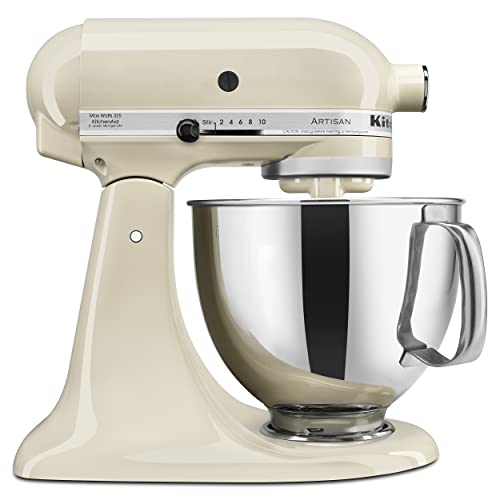
Best Overall: KitchenAid Artisan 5-Quart Tilt-Head
The Artisan is the mixer most recipes assume you own. Its 5-quart bowl handles a double batch of cookie dough or a loaf of bread, and the tilt-head design makes adding ingredients and swapping beaters easy. A power hub on the front accepts dozens of attachments, including a pasta roller, meat grinder and ice cream bowl, per KitchenAid’s accessory line.
The trade-off is that the 325-watt rating, which describes input power rather than kneading force, can strain with stiff dough. Heavy bread dough should be kept to smaller batches. It is a strong all-rounder for cookies, cakes, frosting and the occasional loaf.
Best Budget KitchenAid: Classic Plus 4.5-Quart
The Classic Plus uses the same planetary mixing action in a smaller bowl and a lower-power motor. It handles cake batter, whipped cream and cookie dough well, and accepts the same attachments. For households that bake occasionally, it saves money without leaving the KitchenAid ecosystem.
Its bowl is small for double batches, and kneading is limited to about 8 cups of flour in a recipe at most. If you bake bread weekly, step up to the Artisan or a bowl-lift model.
Best for Large Batches: KitchenAid Professional 600
This bowl-lift mixer has a 6-quart bowl, a stronger motor and a more stable design with a raised bowl arm instead of a tilting head. Bowl-lift models resist walking on the counter when kneading and can mix larger quantities, such as up to a dozen cups of flour in dough according to the manufacturer’s capacity chart.
It is heavy and tall, and it may not fit under some cabinets. Measure your clearance. It is overkill for casual baking but ideal for holiday cookie marathons.
Best for Bread Dough: Bosch Universal Plus
Bosch’s design drives the mixing from a base-mounted motor with a dough hook that sits in the center of a wide bowl. The 800-watt motor and low-profile bowl are built for large amounts of dough, and the maker states capacity of up to roughly 14 cups of flour. It is a favorite of home bread bakers who grind their own flour.
It looks and works differently than KitchenAid, and some accessories are not interchangeable. Whipping small amounts can be less efficient in the wide bowl. It is the one to pick if bread is the main reason you are buying a mixer.
Best Value Alternative: Cuisinart Precision Master 5.5-Quart
The Cuisinart offers a 5.5-quart bowl, a 500-watt rating, a 12-speed range and a tilt-head design. It generally comes with a splash guard, whisk, dough hook and flat beater, plus a power outlet for attachments. It is a practical choice for people who want more capacity than a base KitchenAid at a competitive price.
Its accessory selection is smaller, and long-term repair parts are less widely available than KitchenAid’s. It is a solid choice for general baking.
Best Compact: KitchenAid Artisan Mini 3.5-Quart
The Mini is noticeably smaller and lighter than the full-size Artisan and fits easily in small kitchens or under cabinets. It handles a batch of cookies, a cake, or a single loaf of dough.
The 3.5-quart bowl limits batch sizes, so it is poor for large families or holiday baking. It suits couples, singles and apartment cooks.
Best Entry Level: Hamilton Beach Electric Stand Mixer
Hamilton Beach sells entry-level tilt-head mixers with a 4-quart bowl and several speeds at a low cost. They suit occasional use: whipped cream, cake batter and cookie dough in standard portions.
Expect less durability under heavy loads, and avoid using it with stiff doughs. It is a reasonable first mixer if you are unsure how much you will use one.
How to Choose a Stand Mixer
Bowl capacity and real dough capacity
A 5-quart bowl comfortably handles around 9 dozen cookies or a double cake batter. For bread, the practical limit is lower: most 5-quart tilt-head mixers manage dough with about 8 cups of flour at most. Bowl-lifts and Bosch handle 12 or more.
Tilt-head versus bowl-lift
Tilt-heads are easier for everyday use and cheaper. Bowl-lifts stabilize heavier loads and fit larger bowls but are taller and heavier.
Attachments and parts
If you plan to use pasta rollers, grinders or spiralizers, check that the mixer has an attachment hub and that the accessories are widely sold. Look at warranty length and the availability of replacement bowls and gears.
Worked Example: Match the Mixer to What You Bake
| Baking habit | Flour per batch | Suggested mixer |
|---|---|---|
| Cookies and cakes monthly | 2 to 4 cups | KitchenAid Classic Plus, Hamilton Beach |
| Weekly bread and cookies | 4 to 8 cups | KitchenAid Artisan, Cuisinart |
| Large batches, holiday baking | 8 to 12 cups | KitchenAid Professional 600 |
| Frequent bread, whole grain | 10 to 14 cups | Bosch Universal Plus |
| Small kitchen | 2 to 4 cups | KitchenAid Artisan Mini |
A rough rule: never exceed about 75 percent of the maker’s flour capacity for stiff dough, which protects the gears and extends the life of the machine.
Mistakes to Avoid
- Choosing by wattage alone. Gear design and bowl shape matter as much as the number.
- Overloading with stiff dough; run speed 2 and stop if the head strains.
- Ignoring bowl clearance. Adjust the beater height so it barely touches the bottom of the bowl.
- Putting the bowl or beaters in the dishwasher without checking whether they are coated; many dough hooks discolor.
Frequently Asked Questions
What is the best stand mixer for beginners?
The KitchenAid Artisan 5-quart is the most common choice for beginners, thanks to its versatility, abundant recipes and replacement parts. The Classic Plus is a cheaper alternative with a smaller bowl.
Is a more powerful stand mixer better?
Not always. Wattage ratings aren’t a standard measure of kneading force. Look at gear construction, bowl-lift or tilt-head design and the maker’s capacity chart for dough.
Are KitchenAid mixers worth it?
They are widely valued for durability, accessory range and available parts. Alternatives like Cuisinart offer capacity for less, while Bosch outperforms for bread.
How long does a stand mixer last?
With normal home use, a quality mixer often lasts a decade or more, and gears or motor brushes can sometimes be replaced. Avoid overloading to extend its life.
Can a stand mixer knead bread dough?
Yes. Use the dough hook on a low speed, keep batches within the manufacturer’s flour limit, and watch for the mixer walking across the counter.
Which Stand Mixer Should You Buy?
Buy the KitchenAid Artisan for a do-it-all mixer, a Bosch Universal Plus if you bake bread weekly, a bowl-lift KitchenAid for big batches, the Cuisinart for strong capacity at less cost, and the Mini if counter space is tight. Pick the smallest model that fits your biggest regular batch.




Write Your Review
No reviews yet. Be the first to share your experience!