
Our Short List of 3

- Best for: Home cooks who trim briskets often and want a curved blade with a secure grip.
- 6-inch curved semi-stiff stainless steel blade
- Fibrox Pro textured non-slip handle
- Swiss made
- Dishwasher safe
- Best for: Cooks who want a forged blade that flexes around bone and contours.
- 6-inch flexible boning blade
- Forged high-carbon German steel
- Triple-riveted handle
- Rounded spine

- Best for: Large packer briskets and cooks who want the widest blade on this list.
- 8-inch wide semi-stiff blade
- DEXSTEEL high-carbon stain-free steel
- Sani-Safe textured polypropylene handle with finger guard
- Overall length 13 inches
All 3 Picks at a Glance
| Product | Specs | Action |
|---|---|---|
| Victorinox Fibrox Pro 6-Inch Curved Boning Knife |
| Check price on Amazon |
| Mercer Culinary Renaissance 6-Inch Boning Knife |
| Check price on Amazon |
| Dexter-Russell S138 |
| Check price on Amazon |
Key takeaways
- Looking for the best boning knife for brisket? Compare three boning knives built for trimming brisket, check blade shapes, and pick the right one for you.
Trimming a brisket is a job where the wrong knife costs you meat. A thick layer of fat needs to come off in smooth, even strokes, and the blade has to follow the curve of the muscle without digging in or leaving ragged edges. A boning knife does that work because its narrow blade slides along bone and fat with control that a wide chef’s knife cannot match. That control is what separates a clean trim from a hacked one, and it is why a dedicated boning knife earns its place in the drawer.
This guide compares three boning knives suited to brisket trimming, from a curved semi-stiff blade to a wide flexible one. Every product below was chosen from the names and specifications on its Amazon page, so the blade lengths, materials, and handle details come from the listings themselves. The three knives below cover the main choices for brisket work.
Quick Picks
As an Amazon Associate we earn from qualifying purchases
| Product | Best for | Key spec from title |
|---|---|---|
| Victorinox Fibrox Pro 6-Inch Curved Boning Knife | Controlled trimming on a curved brisket surface | 6-inch curved semi-stiff stainless steel blade |
| Mercer Culinary Renaissance 6-Inch Boning Knife | A forged blade with a comfortable triple-riveted grip | 6-inch flexible forged German steel blade with triple-riveted handle |
| Dexter-Russell S138 | Wide cuts and larger packer briskets | 8-inch wide semi-stiff DEXSTEEL blade, NSF certified |
How to Choose
Pick the blade shape for the cut
A curved boning knife follows the rounded surface of a brisket and gets into the pocket where fat meets meat. A straight blade works better for long, flat trimming strokes along the top of the packer. Flexibility matters too: a semi-stiff blade holds its line through thick fat, while a flexible blade bends around bone and contours. For most brisket trimming, a curved semi-stiff blade is the most versatile starting point. A straight blade has its place too, since long flat strokes along the top of a packer are easier with a straight edge, and many cooks keep both shapes in the drawer.
Check the blade length against the brisket
A 6-inch blade suits most home briskets because it is short enough to control and long enough to cut through a fat cap in a few strokes. An 8-inch blade covers a full packer brisket faster, since each stroke spans more of the surface. A blade that is too long becomes hard to steer around curves, while one that is too short means more strokes and a rougher finish. Match the length to the size of brisket you usually cook. If you cook both small flats and full packers, a 6-inch blade is the safer single choice, since it handles both sizes without feeling unwieldy.
Look at the steel and the edge
High-carbon stainless steel holds an edge through a long trimming session and resists staining from fat and moisture. A blade that dulls halfway through a packer forces you to press harder, which is when slips happen. Check whether the listing states the steel type and whether the blade is stamped or forged. Forged blades tend to feel more balanced, while stamped blades are lighter and easier to maneuver. Either type can work well for brisket, so the choice comes down to how the knife feels in your hand and how often you are willing to sharpen it after a long trimming session.
Choose a handle you can grip when it is greasy
Brisket trimming is a greasy job, and a smooth handle becomes slippery within minutes. A textured, non-slip handle with a finger guard keeps your hand in place even when it is coated in fat. The handle should fill your palm without forcing your fingers apart, and it should feel secure in a wet grip. A knife that slips in your hand is a knife that will cut you, not the brisket. Wipe the handle with a damp cloth between cuts if it gets too slick, since a quick wipe restores grip without slowing you down much.
The 3 Best Options
Victorinox Fibrox Pro 6-Inch Curved Boning Knife
- Best for: Home cooks who trim briskets often and want a curved blade with a secure grip.
- 6-inch curved semi-stiff stainless steel blade
- Fibrox Pro textured non-slip handle
- Swiss made
- Dishwasher safe
Home cooks who trim briskets often and want a curved blade with a secure grip.
The 6-inch blade is shorter than the Dexter on this list, so it takes more strokes on a very large packer.
This Victorinox boning knife pairs a 6-inch curved, semi-stiff stainless steel blade with the Fibrox Pro handle, a textured, non-slip grip designed for wet work. The curved blade follows the shape of a brisket as you trim the fat cap, and the semi-stiff spine holds its line through thick fat without flexing away. It is Swiss made, dishwasher safe, and NSF approved, which suits a home cook who trims briskets regularly and wants a knife that is easy to clean and maintain. The 3.4-ounce weight also keeps hand fatigue low during a long trimming session on a full packer.
Watch out for: The 6-inch blade is shorter than the Dexter on this list, so it takes more strokes on a very large packer.
Mercer Culinary Renaissance 6-Inch Boning Knife
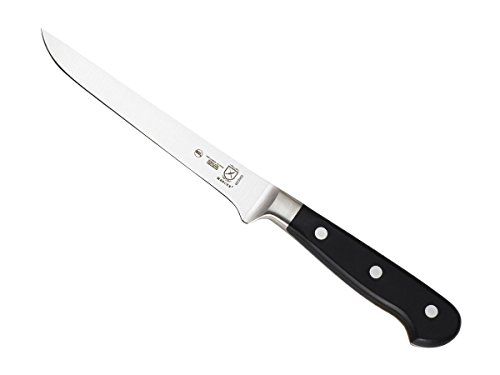
- Best for: Cooks who want a forged blade that flexes around bone and contours.
- 6-inch flexible boning blade
- Forged high-carbon German steel
- Triple-riveted handle
- Rounded spine
Cooks who want a forged blade that flexes around bone and contours.
A flexible blade needs a lighter touch on thick fat, since it can bend away from the cut if you press too hard.
The Mercer Renaissance boning knife is a forged 6-inch flexible blade in high-carbon German steel, with a triple-riveted handle and a rounded spine. The flexible blade bends around bone and contours, which helps when you are working close to the muscle and want to keep as much meat as possible. The forged construction gives it a solid, balanced feel in the hand, and the rounded spine is comfortable when you apply pressure with your other hand. The triple-riveted handle feels secure in a wet grip, and the forged balance makes the knife feel like an extension of your hand rather than a tool you are fighting.
Watch out for: A flexible blade needs a lighter touch on thick fat, since it can bend away from the cut if you press too hard.
Dexter-Russell S138
- Best for: Large packer briskets and cooks who want the widest blade on this list.
- 8-inch wide semi-stiff blade
- DEXSTEEL high-carbon stain-free steel
- Sani-Safe textured polypropylene handle with finger guard
- Overall length 13 inches
Large packer briskets and cooks who want the widest blade on this list.
The 8-inch blade is harder to steer around tight curves than a 6-inch blade, so it suits flat trimming more than detailed work.
The Dexter-Russell S138 is an 8-inch wide boning knife with a semi-stiff DEXSTEEL blade, built for larger cuts and bigger briskets. The wider blade covers more surface with each stroke, which speeds up trimming a full packer, and the Sani-Safe handle has a textured grip with a finger guard for greasy work. It is NSF certified and made in the USA, and it suits a cook who handles large briskets or trims meat in volume. The finger guard on the Sani-Safe handle is a welcome detail when your hands are greasy, since it stops your fingers from sliding forward onto the blade.
Watch out for: The 8-inch blade is harder to steer around tight curves than a 6-inch blade, so it suits flat trimming more than detailed work.
Which One Fits Your Situation
Trimming a brisket at home
The Victorinox Fibrox Pro is the best all-round pick for a home cook. Its curved semi-stiff blade follows the brisket, the textured handle stays secure when greasy, and it is easy to clean after the job. It handles a typical packer without drama. The curved blade follows the meat, and the textured handle stays secure even when your hands are coated in fat.
Working close to the bone
The Mercer Renaissance suits a cook who wants to keep as much meat as possible, because its flexible forged blade bends around bone and contours. It is the right choice when you are trimming carefully and want the blade to follow the meat rather than fight it. The flexible blade is also useful for trimming silver skin from other cuts of meat.
Handling a large packer
The Dexter-Russell S138 covers a big brisket faster, since its 8-inch wide blade spans more surface per stroke. It is the pick for large packers and for cooks who trim meat in volume, where speed matters as much as precision. The 8-inch blade spans more of the brisket with each stroke, so a full packer takes less time to trim from start to finish.
A first boning knife
If this is your first boning knife, the Victorinox Fibrox Pro is the safest starting point, since the curved semi-stiff blade is forgiving and the textured handle stays secure in greasy hands. It costs less than a forged knife and it is easy to clean, so you can learn the trimming technique without worrying about the tool. Upgrade to a forged blade later if you trim briskets every weekend.
Common Mistakes
- Using a wide chef’s knife to trim a brisket, and losing meat to ragged cuts that a narrow boning blade would have avoided.
- Choosing a blade that is too long for the brisket, and struggling to steer around tight curves on a smaller flat.
- Ignoring the handle and ending up with a knife that slips when it is greasy in the middle of a long trim.
- Pressing a flexible blade too hard through thick fat, and bending it away from the cut instead of letting the edge do the work.
- Skipping sharpening before a long trimming session, and forcing a dull blade through thick fat until your hand aches.
Frequently Asked Questions
What size boning knife is best for brisket?
A 6-inch boning knife suits most home briskets because it is short enough to control and long enough to trim a fat cap in a few strokes. An 8-inch blade covers a full packer faster but is harder to steer around curves. For most cooks, a 6-inch curved semi-stiff blade is the most versatile choice for brisket trimming.
Should a brisket boning knife be flexible or stiff?
A semi-stiff blade is the best compromise, because it holds its line through thick fat while still following the curve of the meat. A flexible blade bends around bone and contours, which helps when you want to keep as much meat as possible. A fully stiff blade is harder to control on curved surfaces and can dig into the muscle.
How do I trim a brisket without losing meat?
Work slowly with a sharp boning knife, cutting the fat cap down to about a quarter inch and following the curve of the muscle. Keep the blade flat against the meat and let the edge do the work rather than pressing hard. A curved blade helps here, since it follows the shape of the brisket instead of cutting straight across it.
Can I use a boning knife for other meats?
A boning knife works well for any meat where you need to separate flesh from bone or trim fat, including pork shoulder, whole chicken, and fish fillets. The narrow blade slides along bone with control that a wider knife cannot match. It is less suited to chopping vegetables or slicing bread, where a wider blade is better.
More from Amazon
Programs that pair well with the guide above. Offers and eligibility are set by Amazon and may change.
Set up recurring deliveries of everyday items on eligible products. Terms and savings are set by Amazon.
Explore Subscribe & SaveCollect the home and kitchen items you want in one registry that guests can shop from.
Create a wedding registryFree shipping on eligible items, Prime Video and more. Eligible new members can start with a free trial.
Start a Prime free trialAudiobooks and podcasts to listen to on the go. Eligible new members can start with a free trial.
Try Audible freeAs an Amazon Associate we earn from qualifying purchases.
Write Your Review
No reviews yet. Be the first to share your experience!