

Key takeaways
- Let a new fridge stand upright for several hours before plugging it in.
- Set the thermostat to hold 37 to 40 F.
- Defrost a manual-defrost freezer compartment when ice reaches a quarter inch.
- Do not overfill, so air can circulate.
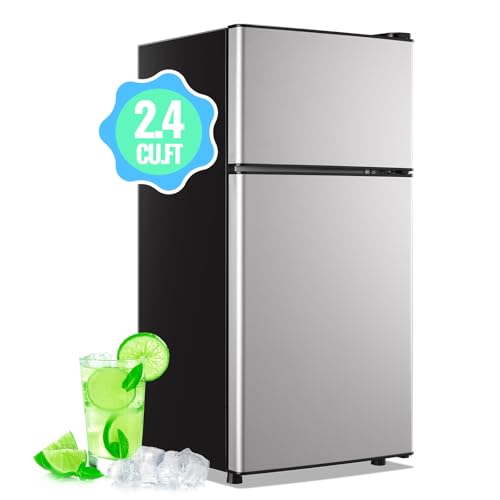
The best mini fridge for most people is the Midea 3.1 cu ft two-door model (WHD-113), because its freezer is a sealed compartment behind its own door, so ice cream stays frozen. For dorms and offices, the Black+Decker BCRK25B at 2.5 cubic feet is a sound, Energy Star certified choice, and the Frigidaire retro EFR372 stands out for style.
Our top picks



As an Amazon Associate we earn from qualifying purchases at no extra cost to you.
Quick Comparison of the Best Mini Fridges
| Pick | Best for | Capacity | Freezer | Price range |
|---|---|---|---|---|
| Midea WHD-113FSS1 | Best overall | 3.1 cu ft | Separate door | Mid-range |
| Black+Decker BCRK25B | Best for dorms | 2.5 cu ft | Small compartment | Budget |
| Black+Decker BCRK32B | Best single-door | 3.2 cu ft | Compartment | Mid-range |
| Frigidaire EFR372 retro | Best style | 3.2 cu ft | Compartment | Mid-range |
| Midea WHS-65LB1 | Best small and budget | 1.6 cu ft | None | Budget |
| Danby 3.2 cu ft all-fridge | Best for office, no freezer | 3.2 cu ft | None | Mid-range |
Best Overall: Midea WHD-113FSS1
This 3.1 cubic foot model has a true separate freezer door, which keeps frozen food colder than the chiller boxes in many compact fridges. It is a good fit for studios, dorms, home bars and bedrooms. The trade-off is a higher cost than the simplest single-door units.
Best for Dorms: Black+Decker BCRK25B
At 2.5 cubic feet it provides two removable glass shelves, a reversible door and Energy Star certification, which suits small dorm spaces and keeps running costs low. Its freezer section is small and works best for ice cube trays and a few frozen snacks.
Best Single-Door: Black+Decker BCRK32B
With 3.2 cubic feet, this model adds capacity for beverages and groceries. It makes sense for shared rooms or small offices.
Best Style: Frigidaire EFR372 Retro
The retro Frigidaire adds 3.2 cubic feet of storage in a design that looks good in a game room or kitchen nook. Some buyers report it keeps frozen items firmer than other compact fridges, but ice cream storage still depends on the setting.
Best Small and Budget: Midea WHS-65LB1
This 1.6 cubic foot Energy Star model has a mechanical thermostat, a reversible door and a single glass shelf. It is suited to a desk, small bedroom or camper where space matters more than capacity.
Best for Offices: Danby 3.2 cu ft All-Fridge
An all-fridge has no freezer compartment, so the entire interior stays at refrigeration temperature. It is a practical choice for lunches and drinks at work. Danby also makes a larger Designer model if you want built-in beverage features.
How to Choose a Mini Fridge
Choose capacity with numbers
A 12-ounce can needs about 0.03 cubic feet of space. A 3.1 cubic foot fridge could hold roughly 70 cans in theory, but shelves and door bins reduce that to about 48. For one person’s groceries and drinks, 2.5 to 3.2 cubic feet is a typical range.
Freezer type matters
A sealed freezer with its own door holds temperatures closer to 0 F. A chiller compartment inside the fridge area is only good for ice and short storage. If you need ice cream or frozen meals, pick a model with a separate door.
Check noise and energy use
Compressor fridges run around 38 to 45 dB. Energy Star models use less electricity, which matters when the fridge runs all day. Place it where it has room to vent.
Door swing and shelves
A reversible door is useful for tight corners. Adjustable glass shelves handle tall bottles.
Leave the right gaps
Most compact fridges need 2 to 4 inches of clearance at the back and sides. Check the manual for exact figures.
Ownership Tips
- Let a new fridge stand upright for several hours before plugging it in.
- Set the thermostat to hold 37 to 40 F.
- Defrost a manual-defrost freezer compartment when ice reaches a quarter inch.
- Do not overfill, so air can circulate.
Mini Fridge Sizes Compared
| Capacity | Typical use | What it holds | Footprint feel |
|---|---|---|---|
| 1.6 to 1.7 cu ft | Desk, nightstand | About 18 to 24 cans | Cube, fits under a desk |
| 2.5 cu ft | Dorm room | About 36 cans plus snacks | Waist-height |
| 3.1 to 3.2 cu ft | Studio, office, bar | About 48 cans or groceries for one | Counter or hip height |
| 4.4 cu ft | Small apartment second fridge | Groceries for two | Tall, more floor space |
These can counts are estimates; shelf layout and door bins change real capacity.
Running Cost Example
An Energy Star mini fridge may use around 250 to 300 kWh a year. At 16 cents per kWh that is about 40 to a set amount a year. A basic model could use more, so look at the yearly kilowatt-hour figure on the label and compare it with the purchase cost. Over four years, a more efficient unit can offset part of a higher purchase cost.
Where to Put It
- Keep it out of direct sunlight and away from ovens or radiators.
- Leave the clearance the manual specifies for airflow.
- Place it on a level surface so the door closes properly.
- For bedrooms, choose models with low noise, around 40 dB or less.
Common Mistakes
People often buy a mini fridge expecting a real freezer and discover the compartment only holds ice. Others forget to check the door swing, and the door hits a wall or desk. Another common issue is overpacking, which blocks airflow and causes warm spots. Finally, leaving a new fridge to settle for a few hours before use avoids compressor issues.
Mini Fridge vs Compact Fridge vs Beverage Cooler
These three get mixed up. A mini fridge is a small, general-purpose cooler for food and drinks, usually 1.6 to 3.2 cubic feet. A compact fridge is a step larger, around 4 to 5 cubic feet, and sometimes has a proper full-width freezer. A beverage cooler is built for bottles and cans only; its shelves are shaped for cylinders and its temperature range is often a little warmer, so it is not ideal for dairy or leftovers.
If you only store drinks, a beverage cooler might hold more cans than a mini fridge of the same size. If you want to keep leftovers, milk or lunch items, a standard mini fridge is the safer choice, because it holds food at the 40 degrees F or below that food safety guidance recommends. For a home bar or garage with mostly cans, a cooler is a neat fit. For a bedroom or office with mixed use, stay with a mini fridge, and choose a separate-door freezer only if you really need frozen food.
Frequently Asked Questions
How big is a mini fridge?
Most range from 1.6 to 4.5 cubic feet, with the common sizes at 1.7 to 3.2 cubic feet.
Do mini fridges have real freezers?
Some do, such as the Midea two-door model. Many single-door models only have a small chiller compartment that is not designed for long-term frozen storage.
Are mini fridges expensive to run?
Energy use is usually modest, and Energy Star certified models use less. Check the yearly kilowatt-hour figure on the label.
Can I put a mini fridge in a garage?
Most are designed for room temperatures, so extreme heat or cold can affect performance. Check the manual for a rated range.
How long should I wait before using a new mini fridge?
Let it stand upright for a few hours and then run it empty for a few hours to reach temperature before loading food.
More from Amazon
Programs that pair well with the guide above. Offers and eligibility are set by Amazon and may change.
Set up recurring deliveries of everyday items on eligible products. Terms and savings are set by Amazon.
Explore Subscribe & SaveCollect the home and kitchen items you want in one registry that guests can shop from.
Create a wedding registryFree shipping on eligible items, Prime Video and more. Eligible new members can start with a free trial.
Start a Prime free trialAudiobooks and podcasts to listen to on the go. Eligible new members can start with a free trial.
Try Audible freeAs an Amazon Associate we earn from qualifying purchases.





Write Your Review
No reviews yet. Be the first to share your experience!