

Key takeaways
- Organize with bins by category such as beef, poultry, vegetables and ready meals.
- Keep an inventory list on the lid to avoid long searches that warm the interior.
- Do not overstuff in a way that blocks airflow around the walls.
- Wipe the lid gasket occasionally so it seals well.
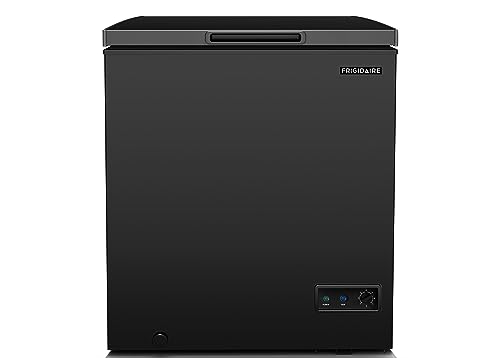
The best chest freezer for most homes is a 14 to 16 cubic foot model such as the Frigidaire 14.8 cu ft or the GE Garage Ready 15.7 cu ft, since chest designs hold the most food per footprint and tend to be the most energy-efficient. If you only need extra space for a few weeks of frozen meals, a 7 cubic foot Arctic King or Frigidaire is easier to place. Big households and bulk buyers should look at the 24.8 cubic foot Frigidaire.
Our top picks



As an Amazon Associate we earn from qualifying purchases at no extra cost to you.
Quick Comparison of the Best Chest Freezers
| Pick | Best for | Capacity | Notable feature | Price range |
|---|---|---|---|---|
| Frigidaire 14.8 cu ft chest | Best overall | 14.8 cu ft | Under 5 ft wide, optional casters, drain | Mid-range |
| GE Garage Ready 15.7 cu ft chest | Best for garages | 15.7 cu ft | Garage-ready temperature range | Mid-range |
| Frigidaire 24.8 cu ft chest | Best large capacity | 24.8 cu ft | Maximum storage, manual defrost | Upper mid-range |
| Arctic King 7.0 cu ft convertible | Best budget | 7 cu ft | Convertible temperature modes | Budget |
| Frigidaire 7.0 cu ft stainless top | Best compact with style | 7 cu ft | Stainless steel top door | Budget to mid-range |
Best Overall: Frigidaire 14.8 cu ft Chest Freezer
This size hits the sweet spot for families who want to stock up. It stays under five feet wide, so it fits most garages and utility rooms, and optional casters make it possible to slide it out for cleaning. A drain at the bottom simplifies manual defrosting. Be aware that it has no open-door alarm, so make sure the lid is fully closed after use.
Best for Garages: GE Garage Ready 15.7 cu ft
If the freezer will live in an unheated or hot space, a garage-ready model is built to keep working across a wider range of surrounding temperatures. At 15.7 cubic feet it holds a lot of food, and it suits hunters, gardeners and bulk buyers. Check the spec sheet for the stated ambient range before you buy.
Best Large Capacity: Frigidaire 24.8 cu ft
The larger sibling of the 14.8 cubic foot model is intended for households that buy a quarter or half beef or process garden harvests. It needs real floor space and a solid level surface. Because it is bigger, running costs and the manual defrost job are larger too.
Best Budget: Arctic King 7.0 cu ft Convertible
Arctic King is a common budget choice, and the 7 cubic foot convertible can run as a freezer or at refrigerator temperature. It is good for a dorm, small home or an overflow unit for holidays. Build quality is simpler than the larger Frigidaire and GE units, so treat it as a light-duty second freezer.
Best Compact with Style: Frigidaire 7.0 cu ft
This model adds a stainless steel top door for a finish that looks fine in a kitchen or finished basement. It works well when you want a small footprint with a more polished look than a typical white cabinet.
How to Choose a Chest Freezer
Size and cost of ownership
A rough rule is 1.5 to 2 cubic feet of freezer per household member, and more if you buy in bulk. Each cubic foot holds about 25 pounds. For a family of four, that suggests 6 to 8 cubic feet as a baseline, but most people end up wanting 14 to 16 for bulk buying. To compare running costs, divide the annual kilowatt-hour figure on the Energy Guide label by capacity: a freezer using 250 kWh per year at 15 cubic feet works out to about 17 kWh per cubic foot per year.
Chest versus upright
Chest freezers lose less cold air when opened because cold air stays in, and they are generally more efficient. The trade-off is access, since you lift items from the top. Baskets and dividers help.
Manual defrost reality
Most chest freezers are manual defrost. Plan to empty and defrost once a year or when frost reaches about a quarter inch. A drain plug makes the job easier.
Placement
Leave a few inches of space on all sides for airflow, keep it level and avoid direct sun. Garage-ready ratings matter in unheated spaces.
Lid and lock features
A counterbalanced lid that stays open and an optional lock are useful in family homes. Interior baskets keep frequently used items near the top.
Ownership Tips
- Organize with bins by category such as beef, poultry, vegetables and ready meals.
- Keep an inventory list on the lid to avoid long searches that warm the interior.
- Do not overstuff in a way that blocks airflow around the walls.
- Wipe the lid gasket occasionally so it seals well.
Chest Freezer Setup: Step by Step
- Choose a level floor with a few inches of clearance on every side, since the compressor needs airflow.
- Let the freezer stand for a few hours before plugging it in, so the oil settles.
- Run it empty until it reaches 0 degrees F, which can take up to a day.
- Add food in stages, starting with items that are already frozen.
- Place a thermometer in the center and check it weekly for the first month.
Organizing a Chest Freezer
The biggest complaint about chest freezers is digging. A simple system helps: use stackable bins or baskets by category, keep a printed inventory taped to the lid, and store flat items such as bagged vegetables upright like files. Freeze ground meat and stews flat in freezer bags so they stack like books and thaw quickly. Reserve the top basket for what you use weekly and the bottom for long-term storage.
Cost Example: Is Bulk Buying Worth It?
Suppose you buy a quarter of a beef, around 100 pounds of packaged cuts, and it saves a set amount per pound compared with grocery purchases. That is a a set amount saving, in addition to what you save by stocking up on sales. A 14.8 cubic foot freezer rated at about 250 kWh a year costs around a set amount a year to run at 16 cents per kWh. Saving a set amount or more on a single purchase more than covers that, though the benefit depends on you actually using the food before it suffers freezer burn.
What Wears First
On chest freezers, the lid gasket and the hinges are the usual wear points, followed by the interior baskets. Wipe the gasket, keep the exterior dry, and avoid slamming the lid. If the freezer ever fails, a full unit stays safe for about 48 hours per USDA guidance if you keep the lid shut, so it is worth having a plan for dry ice or a neighbor’s freezer.
Frequently Asked Questions
What size chest freezer should I buy?
A 7 cubic foot unit suits one or two people, 14 to 16 cubic feet suits most families, and 20 plus cubic feet suits bulk buyers or large households.
Are chest freezers more energy-efficient than upright freezers?
Generally yes. Cold air sinks, so less escapes when the lid opens, and chest models usually have better insulation per cubic foot.
Can a chest freezer go in a garage?
Yes, if it is rated as garage-ready. Standard models can struggle in extreme heat or cold, so check the stated ambient range.
How often should a chest freezer be defrosted?
Usually once a year, or when frost buildup reaches about a quarter inch. A drain makes this simpler.
How much food does a chest freezer hold?
Roughly 25 pounds per cubic foot, so a 14.8 cubic foot model holds around 370 pounds when packed efficiently.
More from Amazon
Programs that pair well with the guide above. Offers and eligibility are set by Amazon and may change.
Set up recurring deliveries of everyday items on eligible products. Terms and savings are set by Amazon.
Explore Subscribe & SaveCollect the home and kitchen items you want in one registry that guests can shop from.
Create a wedding registryFree shipping on eligible items, Prime Video and more. Eligible new members can start with a free trial.
Start a Prime free trialAudiobooks and podcasts to listen to on the go. Eligible new members can start with a free trial.
Try Audible freeAs an Amazon Associate we earn from qualifying purchases.




Write Your Review
No reviews yet. Be the first to share your experience!