

The best heat press machines for home projects are a 9-by-9-inch or 12-by-10-inch portable press for occasional shirts, a 15-by-15-inch clamshell press for regular apparel work, and an auto-open model when consistent pressure and safer unattended release matter most.
Our top picks
 HTVRONT Auto Heat Press Machine for T
- 【Auto Heat Press & Free Hands】- HTVRONT auto…
- 【Heat-up Fast & Evenly】- Our heat press 15x15…
- 【Making More in Less Time】- If you're looking…
 HTVRONT Auto Heat Press 2
- 【Pressure Customization】HTVRONT Auto Heat Press 2 can effectively…
- 【Higher Heat Press Height & Widely Used】HTVRONT 15x15…
- 【Heat Up Fast & Evenly】Our heat press machine…
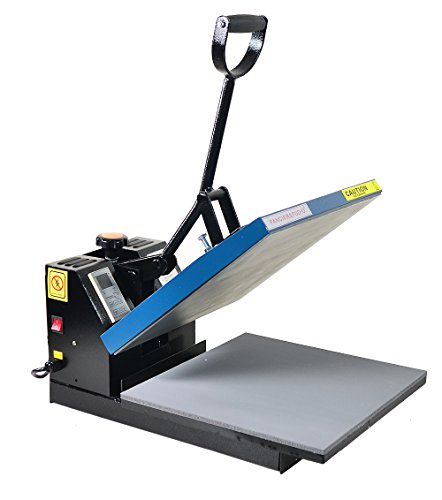 Fancierstudio Digital Heat Press 15 x 15
- Brand new 15-by-15-inch heat press sheet included
- Voltage: 110 volts
- Temperature Range: 0-699 degrees F
| Product | Key specs | |
|---|---|---|
| HTVRONT Auto Heat Press Machine for T | 【Auto Heat Press & Free Hands】- HTVRONT auto… 【Heat-up Fast & Evenly】- Our heat press 15x15… 【Making More in Less Time】- If you're looking… | Check price |
| HTVRONT Auto Heat Press 2 | 【Pressure Customization】HTVRONT Auto Heat Press 2 can effectively… 【Higher Heat Press Height & Widely Used】HTVRONT 15x15… 【Heat Up Fast & Evenly】Our heat press machine… | Check price |
| Fancierstudio Digital Heat Press 15 x 15 | Brand new 15-by-15-inch heat press sheet included Voltage: 110 volts Temperature Range: 0-699 degrees F | Check price |
 HTVRONT Heat Press Machine for Tshirts HTVRONT Heat Press Machine for Tshirts | 【Auto Heat Press & Release - Free Hands】HTVRONT… 【Heating-up Quickly & Evenly】Heat press 15x15 machine combined… 【Safety Use & Auto-Off Feature】Our t-shirt heat press… | Check price |
As an Amazon Associate we earn from qualifying purchases at no extra cost to you.
Quick picks by project and workspace
| Best for | Recommended type or model | Typical pressing area | Typical price range | Why choose it |
|---|---|---|---|---|
| Occasional shirts, small spaces | Cricut EasyPress 3 | 9 x 9 or 12 x 10 inches | $150–$250 | Portable, simple controls, Bluetooth setup through Cricut Heat app |
| Craft fairs and weekly apparel projects | 15 x 15-inch clamshell press | 15 x 15 inches | $180–$350 | Large coverage and adjustable pressure without commercial-machine bulk |
| Repeatable batches with less manual timing | HTVRONT Auto Heat Press | Typically 15 x 15 inches | $250–$450 | Automatic opening and digital time and temperature controls |
| Mugs, tumblers and mixed blanks | Multifunction heat press | Flat platen plus mug or cap attachments | $180–$400 | More applications from one machine, though attachments require storage |
| Frequent production and thick garments | Heavy-duty 15 x 15-inch swing-away or clamshell press | 15 x 15 inches or larger | $400–$1,000+ | Stronger frame, more even pressure and better long-session durability |
Prices are broad 2026 market ranges and vary by platen size, attachments, shipping and included accessories. A machine’s purchase price matters less than whether its platen fits the work you actually make.
How to choose the right heat press
1. Match the pressing area to your largest design
For pockets, sleeve graphics, baby clothing and small tote-bag designs, a 9-by-9-inch press is usually sufficient. A 12-by-10-inch platen gives more flexibility for adult shirts without becoming difficult to store.
A 15-by-15-inch platen is the practical home standard for full-front shirts, sweatshirts and most tote bags. It can press a large design in one cycle, reducing the risk of visible seams between separate applications. Before buying, measure the usable platen rather than relying only on the advertised size; the heating area can be slightly smaller on some machines.
Oversized presses are useful for banners and large garments, but they need a sturdy table, more clearance and more electrical capacity. They are rarely the best first choice for a small craft room.
2. Prioritize temperature accuracy over a high maximum temperature
Most heat-transfer vinyl and sublimation projects need a controlled range rather than extreme heat. A useful home press should offer roughly 200–400°F, a readable digital display and a timer that can be set in seconds. Temperature accuracy and even heating are more important than a maximum setting of 450°F or higher.
Uneven heat can leave an edge partly bonded even when the display shows the correct number. Look for a well-insulated heating plate, stable temperature recovery after opening, and a platen that reaches the target temperature across its surface. For sensitive fabrics, use the blank manufacturer’s recommended temperature and time rather than copying a setting from a different material.
3. Check how pressure is adjusted
Pressure is not the same as temperature. A thick sweatshirt, layered fabric or a raised transfer needs a different adjustment from a single layer of cotton. A pressure knob or dial lets you accommodate those changes; a press with only a fixed handle position is less adaptable.
Clamshell presses close vertically and generally occupy less counter depth. They are convenient for shirts but can make it harder to position bulky items. Swing-away presses move the heated platen completely aside, giving easier access and reducing the chance of brushing your hand against the hot surface, but they require more surrounding space.
For home use, choose a press that closes firmly without requiring excessive force. If the handle feels loose or pressure changes as the platen travels, large designs may not bond evenly.
4. Treat safety features as buying criteria
- Automatic opening: An auto-open mechanism can reduce overheating when the timer ends, particularly during repetitive batches.
- Insulated handle and base: These help keep touch points cooler, but the platen and nearby metal still become hot.
- Stable base: A broad, non-slip base is important when opening a clamshell or swinging a platen aside.
- Audible timer: A clear alert prevents many accidental over-presses.
- Separate power switch: This is easier to verify than relying on a plug alone.
- Ventilation and clearance: Keep the machine on a heat-resistant surface with room around it, and follow its electrical instructions.
An automatic press is not safe to leave unattended. Keep children, pets and loose fabric away from the hot platen, and unplug the machine after it has cooled.
Decision matrix for home shoppers
| Your situation | Best fit | Minimum useful specifications | Main compromise |
|---|---|---|---|
| Budget under $200 and fewer than five projects monthly | Portable 9 x 9 or 12 x 10-inch press | 200–400°F range, digital timer, insulated handle | Small platen and more manual pressure control |
| Beginner making adult shirts and tote bags | 12 x 10-inch portable press or entry 15 x 15-inch clamshell | Adjustable time, temperature and pressure | Portable models may require more careful hand pressure |
| Limited storage in an apartment | Portable press with a separate heat-resistant mat | Under about 15 lb, compact footprint, storage case or cover | Not ideal for very large designs or fast batches |
| Weekly orders or craft-fair inventory | 15 x 15-inch auto-open or heavy-duty clamshell | Even heating, adjustable pressure, reliable timer | Heavier and more expensive |
| Shirts plus mugs, caps and tumblers | Multifunction press only if attachments are genuinely needed | Interchangeable platens and compatible vessel sizes | More setup time, parts and potential maintenance |
Portable press versus 15-by-15-inch press
A portable press wins when storage, weight and simplicity matter. The Cricut EasyPress 3, available in 9-by-9 and 12-by-10-inch versions, is aimed at this category and adds app-guided setup through Bluetooth. It is a sensible choice for occasional shirts, small graphics and crafters who do not want a permanent workstation.
A 15-by-15-inch clamshell wins on coverage. It can press most adult-shirt designs in one cycle and usually provides a more familiar pressure adjustment. The trade-off is a machine that may weigh roughly 35–50 pounds and need a dedicated table. If you regularly make sweatshirts or more than a few garments at a time, the larger platen usually saves more time than a portable press.
The HTVRONT Auto Heat Press is an example of the automatic category. Its automatic opening and 15-by-15-inch format are useful for repeated jobs, but confirm the current model’s clearance, pressure range and electrical requirements before purchase because versions and bundles can change.
A practical coverage calculation
Suppose your largest design is 11 inches wide by 14 inches tall. A 9-by-9-inch press cannot cover it in one application. You would need at least two placements, and a slight alignment error could create a visible line. A 12-by-10-inch press is also too narrow in one direction. A 15-by-15-inch platen provides a 2-inch margin on the 11-inch dimension and a 1-inch margin on the 14-inch dimension, making one-cycle pressing possible.
That extra coverage can reduce a 90-second application to one cycle instead of two, while also reducing repositioning and alignment work. For a small pocket logo, however, paying for the larger platen adds little practical benefit.
Setup and maintenance that protect the machine
- Place the press on a level, heat-resistant surface with space for the handle or swing-away motion.
- Check the transfer, blank and platen are compatible before selecting temperature and time.
- Preheat only when the material instructions call for it; some fabrics can scorch or distort.
- Use a pressing mat or protective sheet when recommended, keeping the transfer area flat.
- After each session, allow the platen to cool fully before storing the machine.
- Wipe cooled residue with a soft cloth. Do not scrape the heating surface with metal tools.
- Inspect the cord, plug, pressure hinge and silicone pad periodically for heat damage or wear.
The silicone pad and protective sheets are consumables. They can compress, discolor or develop dents, especially with frequent use. A worn pad may contribute to uneven pressure, while adhesive residue on the platen can transfer to later garments. Replace damaged pads rather than compensating with excessive pressure.
Final buying recommendation
Choose a portable 9-by-9 or 12-by-10-inch press if you make occasional small projects and need easy storage. Choose a 15-by-15-inch press if adult shirts, sweatshirts or batches are central to your plans. Choose an auto-open model when repetitive work and consistent timing justify the extra cost. Whichever format you select, prioritize even heating, adjustable pressure, a clear timer and a stable safety-conscious design over a long list of attachments.








Write Your Review
No reviews yet. Be the first to share your experience!