
Key takeaways
- Which knife size is best? Match blade length to the job: an 8-inch chef's knife, 3.5-inch paring knife, and 9-inch bread knife cover most home cooking.
As an Amazon Associate we earn from qualifying purchases.
Ask ten cooks for the best knife and you will hear ten brand names. Ask what actually makes a knife feel right in daily use, and the answer is usually a number: the blade length. A knife that is too long for your board and your hands feels clumsy no matter how good the steel is, while one that is too short turns slicing into sawing. Size decides how a knife behaves before steel, handle shape, or price ever get a say.
This guide is for anyone choosing a first serious knife, replacing a worn-out block set one piece at a time, or wondering why a knife that felt fine in the shop feels awkward at home. It walks through the standard size of every common kitchen knife, explains what each length is genuinely good at, and shows how to match blade length to your hands, your cutting board, and the food you cook most.
How to Choose
Start With the Job the Blade Has to Do
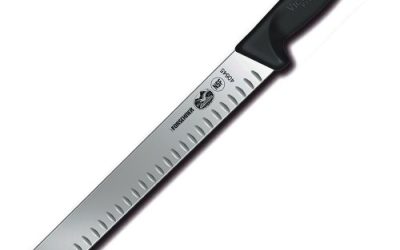
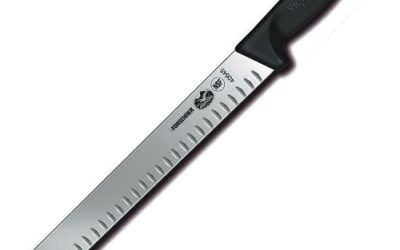
Every kitchen knife type exists in a fairly narrow size range, and that range is not arbitrary. Paring knives run 3 to 4 inches because they work in your hand, peeling and trimming with your thumb acting as the guide. Utility knives stretch to 4 to 6 inches for sandwiches, fruit, and small vegetables on a board. Bread knives sit at 8 to 10 inches so the serrated edge can cross a whole loaf in one stroke instead of tearing back and forth. Carving and slicing knives go longest of all, 8 to 12 inches, because a roast or a turkey breast should be cut with one long pull rather than several short saws.
The working rule behind all of these numbers is simple: for slicing, the blade should be longer than the food is wide. A 6-inch blade trying to slice a 9-inch-wide squash will run out of edge before it runs out of squash, and the result is a wedged, ragged cut. Pick the size from the food you cut most often, then check the other three factors below before you settle on it.
The Chef’s Knife Decision: 6, 8, or 10 Inches
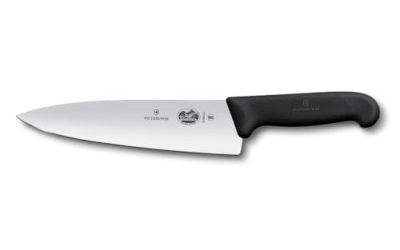
The chef’s knife is where the size question matters most, because it does the bulk of everyday chopping, dicing, and mincing. The 8-inch version is the standard recommendation for a reason: it is long enough to rock through a pile of herbs and to slice a large onion in one motion, yet short enough that the tip stays easy to control for most adults. If you are buying one knife and have no strong reason to go another way, 8 inches is the size to get.
The 6-inch chef’s knife suits smaller hands, smaller boards, and cooks who mostly handle modest amounts of produce. It gives up some rocking length and feels cramped against a big cabbage, but it is noticeably less intimidating and easier to steer. The 10-inch version is the opposite trade: more edge, more weight, and more knuckle-clearing reach for watermelons, large roasts, and high-volume prep. Experienced cooks often love it; beginners frequently find the tip wandering. Length also adds weight, so a 10-inch knife in thick stock can tire a wrist over a long session in a way the 8-inch never will.
Match the Blade to Your Hand and Grip
Size on the box refers to the blade only, measured from the heel, where the edge meets the handle, straight to the tip. The handle adds roughly another 4 to 5 inches, so an 8-inch chef’s knife is about 13 inches overall. That total length is what your hand actually manages, and it is why two knives with the same blade length can feel completely different.
Most cooks hold a chef’s knife with a pinch grip, thumb and forefinger pinching the blade just in front of the handle. With that grip, control comes from the balance point sitting near your fingers, and a blade that is too long pulls the balance forward until the tip feels heavy and vague. Smaller hands lose precision fastest on long blades, while larger hands can feel cramped on a short handle even when the blade length is right. If a knife feels like you are steering it rather than guiding it, the honest fix is usually a shorter blade, not more practice. Handle length and shape deserve the same attention as the number on the blade, because your hand spends the whole session on the handle, not the edge. If you can, hold two sizes of the same knife line before choosing: the right length is the one where the tip goes exactly where you expect without you thinking about it, and that feeling usually settles the 6 versus 8 versus 10 question faster than any chart.
Check Your Board, Counter, and Storage
A knife can only work as well as the surface under it allows. The practical check is diagonal: a blade should fit across your cutting board with room to spare at both ends, because strokes run corner to corner more often than straight across. An 8-inch chef’s knife pairs comfortably with a board around 18 inches long; put that same knife on a small 12-inch board and the tip or heel will hang over the edge on every angled cut, which is both messy and unsafe.
Storage quietly limits size too. A 10-inch chef’s knife needs roughly a 15-inch drawer slot or a long stretch of magnetic strip, and many standard knife blocks are built around 8-inch blades, so longer knives may not seat fully in the slot. Counter depth matters as well: a long slicing knife drawn backward out of a block needs clearance behind it. None of this argues against long knives if you have the space. It simply means the best knife size is partly a measurement of your kitchen, and taking thirty seconds with a tape measure before ordering saves a return afterward.
Which One Fits Your Situation
You Are Buying Your First Real Knife
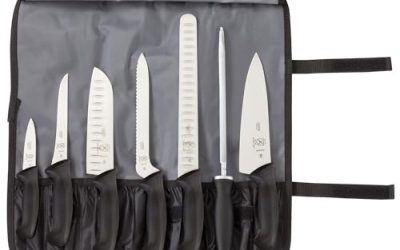
Start with an 8-inch chef’s knife and a 3.5-inch paring knife. Between them they honestly cover the large majority of home cooking: the chef’s knife handles chopping, slicing, and dicing on the board, and the paring knife takes over for peeling, coring, and the small in-hand jobs where a big blade is a liability. Add an 8 to 10-inch bread knife when crusty loaves or tomatoes start defeating the chef’s knife, and you have the classic three-knife core that most kitchens run on for years. Resist the giant block set for now; three knives in the right sizes teach you more than fourteen in random ones.
You Have Small Hands or a Compact Kitchen
Drop one size everywhere. A 6-inch chef’s knife or a 7-inch santoku gives you a real workhorse blade that stays easy to steer, and the santoku’s flatter edge suits the push-cutting style many smaller-handed cooks prefer anyway. A 5-inch utility knife can then do double duty for sandwiches, fruit, and smaller vegetables, reducing how often you reach for anything bigger. Keep the paring knife at 3 to 3.5 inches, since in-hand control matters even more with a small grip. This smaller kit is not a compromise set; it is the correct sizing for your hands and your boards.
You Cook Big: Roasts, Melons, and Batch Prep
Go long where it counts. A 10-inch chef’s knife gives you the edge length to break down a whole chicken, cube a butternut squash, or work through a mountain of onions without the heel running out of board. Pair it with a slicing knife of 10 to 12 inches for roasts, hams, and brisket, where one clean pull per slice keeps the surface smooth instead of shredded. An 8 to 10-inch bread knife earns its place here too. Just confirm your board and storage can take the extra length first, using the checks above, because these are the knives that most often end up exiled to a drawer for being too big for the room.
You Mostly Cook Vegetables
Your center of gravity shifts shorter and taller. A santoku of 5 to 7 inches or a nakiri around 6.5 to 7 inches handles the daily run of onions, peppers, cucumbers, and leafy greens, and the taller blade gives your knuckles clearance while doubling as a scoop for moving chopped vegetables off the board. The nakiri’s flat edge is built for straight up-and-down chopping through dense vegetables like sweet potato and cabbage. Keep a 3.5-inch paring knife beside them for coring and trimming, and you may find the big chef’s knife becomes the specialist you reach for least. If your vegetable prep includes a lot of tomatoes and citrus, a short serrated utility knife around 5 inches is a worthwhile fourth piece, since its teeth grip slippery skins that a straight edge skates across.
Common Mistakes
- Shopping by overall length instead of blade length, then discovering the 12-inch knife you ordered has a short blade and a long handle.
- Assuming a longer knife is automatically the more capable or professional choice, even when it overhangs your board and tires your wrist.
- Slicing wide food with a short blade, which forces a sawing motion that tears soft items and wedges into hard ones.
- Buying a 4.5-inch “paring knife” that is really a utility knife, then wondering why in-hand peeling feels clumsy and unsafe.
- Filling a block with one of every type in a single size, instead of matching each knife’s length to the job it actually does.
Frequently Asked Questions
What is the best knife size for a beginner?
An 8-inch chef’s knife is the best starting size for most beginners. It is long enough for proper rocking cuts and one-stroke slicing of common vegetables, yet the tip stays controllable while your grip and knife skills develop. Add a 3.5-inch paring knife for detail work and you can handle nearly everything a home recipe asks for.
How is knife size measured?
Knife size means blade length, measured from the heel, where the cutting edge meets the handle, to the tip along the spine. The handle is not included. A typical handle adds 4 to 5 inches, so an 8-inch chef’s knife measures roughly 13 inches overall. When a listing gives both numbers, compare blade length to blade length, since that is the part that determines what the knife can cut.
Is a 6-inch or 8-inch chef’s knife better?
Neither is better in the abstract; it depends on your hands, board, and ingredients. The 8-inch suits average to large hands, standard boards, and varied cooking, which is why it is the default. The 6-inch is the smarter buy for small hands, small boards, and lighter prep, where its easier steering beats the extra edge you would rarely use. If you regularly break down large squash, melons, or roasts, skip both and look at 10 inches.
What size bread knife do I actually need?
Most home bakers are well served by 8 to 10 inches. The serrated blade should be longer than your widest loaf so each slice is one smooth stroke rather than a sawing contest; a standard sandwich loaf or boule fits comfortably under a 9-inch blade. Very wide artisan loaves are the only common reason to go longer, and shorter serrated knives under 8 inches tend to double as tomato knives rather than true bread knives.
More from Amazon
Programs that pair well with the guide above. Offers and eligibility are set by Amazon and may change.
Set up recurring deliveries of everyday items on eligible products. Terms and savings are set by Amazon.
Explore Subscribe & SaveCollect the home and kitchen items you want in one registry that guests can shop from.
Create a wedding registryFree shipping on eligible items, Prime Video and more. Eligible new members can start with a free trial.
Start a Prime free trialAudiobooks and podcasts to listen to on the go. Eligible new members can start with a free trial.
Try Audible freeAs an Amazon Associate we earn from qualifying purchases.

Write Your Review
No reviews yet. Be the first to share your experience!