

The best ramekin set for baking is a six-piece, 6-ounce stoneware set with an oven rating of at least 500°F (260°C), straight sides, and a stackable shape—unless you mainly make crème brûlée, soufflés, or small prep portions, where a different size or material may work better.
Our top picks
 vancasso 8 oz Ramekins with Lid
- 【Innovative Date Tracking】Featuring 31 small dots on the…
- 【Versatile Use】Measuring 2.2 x 3.9 inches with a…
- 【Three Capacity Options】Choose from 6 oz, 8 oz,…
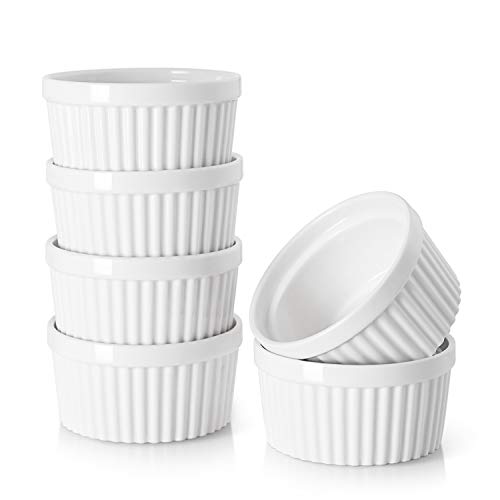 DOWAN 4 oz Ceramic Ramekins Set of
- Crafted from premium-grade, heavy-duty ceramic, these ramekins offer…
- Perfectly sized to fit 4QT to 10QT single…
- Indulge your sweet tooth with professional-grade baking
 Paris Hilton Heart Shaped Ramekins Oven Safe
- Finely crafted ceramic stoneware construction distributes heat evenly…
- This ceramic stoneware ramekin set is microwave, freezer,…
- Heart-shaped baking ramekins feature a playful pink gingham…
| Product | Key specs | |
|---|---|---|
| vancasso 8 oz Ramekins with Lid | 【Innovative Date Tracking】Featuring 31 small dots on the… 【Versatile Use】Measuring 2.2 x 3.9 inches with a… 【Three Capacity Options】Choose from 6 oz, 8 oz,… | Check price |
| DOWAN 4 oz Ceramic Ramekins Set of | Crafted from premium-grade, heavy-duty ceramic, these ramekins offer… Perfectly sized to fit 4QT to 10QT single… Indulge your sweet tooth with professional-grade baking | Check price |
| Paris Hilton Heart Shaped Ramekins Oven Safe | Finely crafted ceramic stoneware construction distributes heat evenly… This ceramic stoneware ramekin set is microwave, freezer,… Heart-shaped baking ramekins feature a playful pink gingham… | Check price |
| vancasso 6 oz Ramekins with Lid | 【Innovative Date Tracking】Featuring 31 small dots on the… 【Versatile Use】Measuring 2.1 x 3.7 inches with a… 【Three Capacity Options】Choose from 6 oz, 8 oz,… | Check price |
As an Amazon Associate we earn from qualifying purchases at no extra cost to you.
Best ramekin sets for baking: the short list
- Best all-purpose choice: Le Creuset Stoneware Ramekins — Durable glazed stoneware, commonly available in 6-ounce and larger sizes, with excellent heat retention for soufflés, baked eggs, cobblers, and individual gratins.
- Best for even baking: Emile Henry Ramekins — French ceramic designed for oven use, with gradual heating that suits custards and other delicate bakes.
- Best lightweight prep set: Duralex Ovenchef or similar tempered-glass ramekins — Glass is easy to see through, comparatively light, and useful for mise en place as well as baking.
- Best for crème brûlée: shallow 5- to 7-ounce porcelain ramekins — Their broad surface gives custard a thinner, more even layer and more caramelized topping.
- Best budget format: plain white porcelain ramekins in a six-pack — A practical option for frequent baking, provided the set has a clearly stated oven-safe temperature and a smooth, nonporous glaze.
What size ramekin should you buy?
Capacity affects baking time, texture, and portion size more than many product listings suggest. A deeper 6-ounce ramekin and a shallow 6-ounce ramekin hold the same volume, but the shallow one exposes more surface area and usually cooks custards faster.
| Nominal size | Approximate capacity | Best uses | Practical limitation |
|---|---|---|---|
| 2–3 oz | 60–90 ml | Butter, spices, dipping sauces, tiny desserts, tasting portions | Too small for most individual soufflés |
| 4 oz | 120 ml | Crème brûlée, baked eggs, condiments, small pot pies | Can overflow with rising batters if filled too high |
| 6 oz | 180 ml | Soufflés, lava cakes, custards, cobblers, prep bowls | Often too large for small dessert portions |
| 8–10 oz | 240–300 ml | Individual gratins, baked oatmeal, larger puddings, side dishes | Requires longer baking and more storage space |
| 12 oz or more | 355 ml or more | Generous baked dishes and serving bowls | Less versatile for classic ramekin recipes |
For one set that covers the most recipes, choose six 6-ounce ramekins. If crème brûlée is your priority, choose shallow 4- to 6-ounce dishes with an interior diameter of roughly 4 to 5 inches. For soufflés, look for straight or slightly flared sides and a depth of about 2 inches; steep vertical walls help the mixture climb.
Head-to-head: stoneware, porcelain, and glass
Stoneware
Stoneware is the strongest all-rounder for baking. It holds heat well, resists ordinary kitchen wear, and keeps a baked dish warm at the table. Le Creuset and Emile Henry are established examples of stoneware cookware lines that include ramekin-style dishes.
The trade-off is weight and slower temperature response. A cold stoneware dish placed into a hot oven may need more time to heat through, and sudden temperature changes can increase thermal-shock risk. Do not move a hot stoneware ramekin directly onto a wet or cold surface unless the manufacturer specifically permits it.
Porcelain
Porcelain is usually thinner and lighter than stoneware, with a smooth white surface that makes browning and portion presentation easy to judge. It is particularly good for custards, soufflés, and restaurant-style individual desserts. The glaze can chip if ramekins knock together, so stack them carefully and avoid metal utensils against the rim.
Tempered glass
Tempered glass is useful when you want to see the contents and keep the dishes relatively light. Duralex is a well-known tempered-glass brand with ovenware in its range. Glass often cools faster than stoneware, which is convenient for handling but less helpful when you want food to stay hot.
Check the exact product instructions before using any glass ramekin in a preheated oven. “Tempered” does not mean immune to thermal shock. Avoid transferring a frozen or refrigerated glass dish straight into a hot oven unless it is explicitly rated for that use.
Oven-safe temperatures: the specification that matters
Look for a stated maximum oven temperature rather than a vague phrase such as “heat resistant.” Many reputable ceramic ramekins are rated around 500°F to 520°F (260°C to 271°C), while some glass products have different limits. The lowest-rated component is the limiting factor: lids, decorative finishes, and plastic packaging are not necessarily oven-safe even when the bowl is.
| Ramekin type | Typical oven rating to look for | Best temperature practice | Thermal-shock concern |
|---|---|---|---|
| Glazed stoneware | About 500–520°F / 260–271°C | Preheat normally; avoid abrupt temperature changes | Medium |
| Porcelain | About 450–500°F / 232–260°C | Follow the specific maker’s limit | Medium |
| Tempered glass | Varies substantially by product | Use only within the printed oven instructions | High if moved rapidly between temperatures |
Never assume a ramekin is safe under a broiler. Broiling exposes the rim to intense radiant heat and may exceed the bowl’s general oven rating. Crème brûlée recipes are safer with a culinary torch unless the manufacturer specifically approves broiler use.
Decision matrix: choose by your kitchen and baking habits
| Your situation | Best choice | Why |
|---|---|---|
| Occasional baker with limited cabinet space | Six stackable 4-ounce porcelain ramekins | Compact, versatile for sauces and small desserts |
| Frequent baker making soufflés | Six straight-sided 6-ounce stoneware or porcelain ramekins | Consistent portions and enough vertical room to rise |
| Crème brûlée specialist | Shallow porcelain ramekins, 4–7 ounces | More surface area for an even custard layer and sugar crust |
| Meal-prep and ingredient organization | Tempered glass or lightweight porcelain, 2–4 ounces | Easy to identify, carry, and wash in batches |
| Frequent oven-to-table use | Glazed stoneware with a broad foot | Stable, heat-retentive, and less likely to slide on a serving surface |
| Very tight storage | Nested or stackable bowls with a low-profile rim | Reduces the vertical space used by a six-piece set |
Stackability, shape, and fit
Stackability is not just a storage feature. A flared rim can make individual ramekins easier to lift from a water bath, but an exaggerated rim wastes cabinet space and may prevent secure nesting. Before buying, check the exterior height and widest diameter of one dish, then estimate the stack’s height. A six-piece stack that adds 1.25 inches per dish will require roughly 7.5 inches of vertical clearance; a nested design may use considerably less.
For a water bath, choose a stable base and a rim that is easy to grip with tongs or a folded towel. For soufflés, avoid very rounded interiors because the mixture has less continuous vertical support. For prep, a pouring lip can be helpful, although it may reduce stackability and is unnecessary for most baking.
Ownership realities: what wears out first?
- Rims chip first. Do not force nested dishes apart or place them loosely in a crowded sink. A thin silicone mat or cloth divider helps protect glazed edges.
- Staining is usually cosmetic. Tomato sauce, caramel, and baked-on chocolate can discolor light glaze. Soak with warm water and detergent, then use a nonabrasive paste of baking soda for persistent marks.
- Thermal shock causes more trouble than oven heat. Let a hot ramekin cool before rinsing it, and do not place it on a cold stone countertop without protection.
- Dishwasher claims vary. Dishwasher-safe does not guarantee that repeated high-heat drying will preserve printed decoration or prevent edge wear. Plain glazed interiors are the easiest to maintain.
- Metal tools can damage glaze. Use a silicone spatula or wooden spoon to loosen baked edges.
A simple buying calculation
Suppose a six-piece set costs $30 to $60 and you use it twice per month for five years. That is 120 baking sessions. If every ramekin is used each time, the purchase cost works out to about $0.05 to $0.10 per ramekin-use, before considering breakage. This is why a slightly more expensive set with a reliable oven rating, replaceable individual pieces, and good stacking can be better value than a cheaper set that chips quickly.
Final recommendation
Buy six stackable 6-ounce stoneware ramekins if you want the broadest baking range, especially for soufflés, baked custards, and individual gratins. Choose shallow porcelain instead for crème brûlée, tempered glass for lightweight prep and visibility, or 4-ounce dishes when cabinet space and smaller portions matter most. Whichever material you choose, prioritize a clearly stated oven temperature, straight-sided geometry for rising bakes, stable bases, and a stack that fits your actual cupboard.








Write Your Review
No reviews yet. Be the first to share your experience!