

Key takeaways
- 120 g plain flour
- 40 g cornflour (cornstarch)
- 1 teaspoon baking powder
- ¾ teaspoon fine salt
- 330 ml very cold beer, divided
- Optional: ½ teaspoon ground black pepper or paprika
- Neutral frying oil, such as rapeseed, sunflower, or peanut oil
Best Beer Batter Recipe for Crispy Fried Food
The best beer batter recipe for crisp, light fried food uses 120 g plain flour, 40 g cornflour, 330 ml very cold beer, 1 teaspoon baking powder, and a short 10-minute rest before frying at 180°C (350°F).
This ratio creates a batter that clings to fish, vegetables, and chicken without becoming thick and bready. Cornflour reduces gluten development and adds brittleness, while cold beer slows the batter’s absorption of oil. The beer style matters, but temperature, batter thickness, and frying in small batches matter even more.
Our top picks
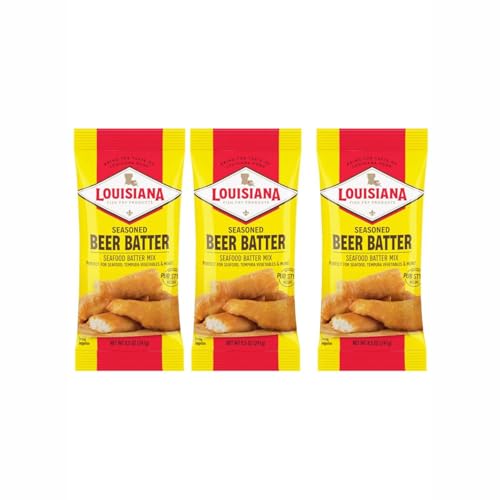
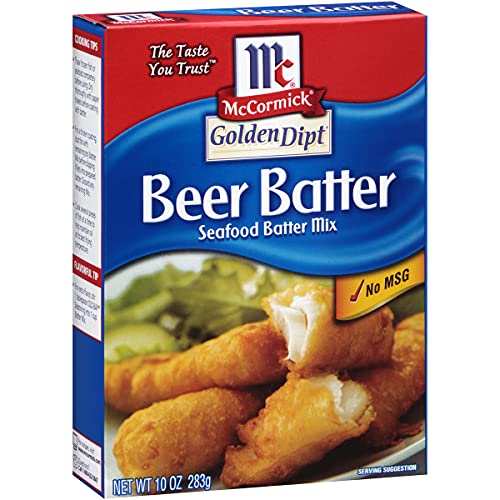


As an Amazon Associate we earn from qualifying purchases at no extra cost to you. Ratings are shown as listed on Amazon.
The master beer batter recipe
- 120 g plain flour
- 40 g cornflour (cornstarch)
- 1 teaspoon baking powder
- ¾ teaspoon fine salt
- 330 ml very cold beer, divided
- Optional: ½ teaspoon ground black pepper or paprika
- Neutral frying oil, such as rapeseed, sunflower, or peanut oil
Method
- Whisk the flour, cornflour, baking powder, salt, and any optional seasoning in a large bowl.
- Pour in about 280 ml of the cold beer and whisk only until no large dry pockets remain. Small lumps are acceptable; overmixing develops gluten and makes the coating chewy.
- Add enough of the remaining beer to produce a batter resembling single cream. It should coat a dipped finger but run off in a steady stream.
- Rest the batter for 10 minutes in the refrigerator. Stir once before using, then adjust with a tablespoon of beer if it has thickened too much.
- Pat the food dry and dust it lightly with plain flour. Dip it into the batter, let the excess drip off for two seconds, and lower it carefully into 180°C oil.
- Fry until deeply golden and cooked through. Drain on a wire rack rather than directly on paper towels, which can trap steam underneath the crust.
This quantity makes approximately 550 g of batter, enough for about 700–900 g of fish, vegetables, or boneless chicken, depending on how thickly each piece is coated.
Beer styles compared for frying
Beer contributes water, carbonation, flavor, and a small amount of sugar. A clean, carbonated lager is the safest choice for a delicate crust, while stronger or darker beers bring more pronounced flavor and color.
| Beer style | Typical alcohol | Crust result | Best use | Watch for |
|---|---|---|---|---|
| Light lager or pilsner | 4–5% | Light, crisp, pale-golden | White fish, prawns, courgette | Subtle flavor can need stronger seasoning |
| American pale ale | 4.5–6.5% | Crisp with noticeable malt and hop character | Onion rings, mushrooms, chicken | Very hoppy beers can taste bitter when reduced in the crust |
| Wheat beer | 4.5–5.5% | Light and tender, with a soft grain flavor | Fish, cauliflower, asparagus | Often produces a slightly darker, more aromatic coating |
| Amber ale | 4.5–6% | Deeply colored and malty | Chicken, sweet potato, firm vegetables | Extra malt sugars brown quickly |
| Stout or porter | 4–7% | Dark, strongly flavored, substantial | Chicken, onion, hearty vegetable fritters | Can overpower mild fish and darken before the food is ready |
For a first batch, choose a cold pilsner or standard lager. If you want a more distinctive batter, replace up to half the lager with wheat beer or pale ale. Avoid heavily sweet, intensely bitter, or very high-strength beers unless their flavor is central to the dish.
Why the flour-to-liquid ratio changes the result
| Flour mixture | Beer amount | Approximate texture | Best match |
|---|---|---|---|
| 160 g flour, no cornflour | 300–320 ml | Thick, bready, durable | Large chicken pieces or very wet vegetables |
| 120 g flour + 40 g cornflour | 300–330 ml | Balanced, crisp, light | All-purpose recipe |
| 100 g flour + 60 g cornflour | 300–330 ml | Very brittle and delicate | Thin fish fillets and small vegetables |
| 120 g flour + 40 g rice flour | 300–330 ml | Dry, crackly, highly crisp | Tempura-style vegetables and prawns |
Use the balanced 120 g flour and 40 g cornflour formula when cooking several ingredients at once. Increase the cornflour for a thinner, crunchier coating, but handle the food gently because a high-starch batter can fracture more easily.
Resting time: short is better
A 10-minute rest gives the flour time to hydrate and lets the batter become more consistent. It also makes lumps easier to incorporate without aggressive whisking. Resting for 20–30 minutes can work, but the batter may thicken and lose some carbonation, so loosen it with a little cold beer before dipping.
Do not prepare the batter several hours ahead if maximum lightness is the priority. The flour continues absorbing liquid, and the bubbles gradually dissipate. Keep it cold, covered, and use it within about 30–45 minutes for the clearest texture.
Choose the frying temperature by ingredient
| Food | Piece size | Oil temperature | Typical cooking time |
|---|---|---|---|
| White fish | 150–200 g fillets | 180°C | 4–7 minutes |
| Firm vegetables | 5–8 mm slices or small florets | 175–180°C | 3–5 minutes |
| Onion rings | 8–12 mm rings | 175–180°C | 3–5 minutes |
| Boneless chicken | 2–3 cm strips | 170–175°C | 6–9 minutes |
Use a clip-on thermometer or deep-frying thermometer rather than judging by color alone. Oil below 170°C tends to produce greasy batter because the crust sets slowly. Oil above 185°C can brown the coating before chicken or thick vegetables are cooked. Chicken should reach a safe internal temperature appropriate to local food-safety guidance; use a probe thermometer for thick pieces.
Decision guide: which version should you make?
| Your situation | Recommended choice | Reason |
|---|---|---|
| First attempt | Cold lager, 120:40 flour-to-cornflour ratio, 10-minute rest | Most forgiving balance of adhesion and crunch |
| Delicate fish | Pilsner, slightly thin batter, 180°C oil | Produces a lighter coating that does not dominate the fish |
| Vegetables with high moisture | Wheat beer, flour dusting, 175–180°C oil | The preliminary flour layer improves adhesion |
| Chicken strips | Pale ale, slightly thicker batter, 170–175°C oil | Extra coating protects the chicken while it cooks through |
| Maximum crunch | Rice flour or extra cornflour, fresh batter, 180°C oil | Higher starch content creates a more brittle crust |
| Small saucepan or limited oil | Small pieces and batches of 3–4 pieces | Reduces temperature loss and makes turning safer |
Common mistakes that soften the crust
- Wet ingredients: Surface moisture turns to steam and can separate the batter. Pat food thoroughly dry before flouring.
- Overmixing: Stop whisking as soon as the dry ingredients are hydrated. A few small lumps disappear during frying.
- Overcrowding: Adding too much food can drop oil temperature by 10–20°C. Fry in batches and allow the oil to return to temperature.
- Using a cold, thick batter: Cold is helpful, but batter that flows slowly forms a heavy shell. Thin it with beer one tablespoon at a time.
- Draining on a flat plate: A wire rack allows steam to escape and keeps the underside crisp.
- Reusing degraded oil: Strain oil after it cools and discard it if it smells stale, smokes unusually early, or contains many dark crumbs.
Equipment and ownership considerations
You do not need a dedicated fryer. A heavy 3–4 litre saucepan, a thermometer rated for high heat, long tongs, and a wire rack are sufficient. A wider pan offers more surface area but usually requires more oil; a narrower pan uses less oil while giving greater depth around the food.
For a 3-litre pan filled to a safe level, expect to use roughly 1.5–2 litres of oil. Oil is the main consumable, and its useful life depends on the food: clean fish or vegetables may allow several uses, while heavily seasoned chicken or wet batter particles shorten its life. Cool it completely, strain through a fine sieve, and store it in a sealed, light-resistant container. Never pour used oil down a drain.
Final recommendation
For the most reliable all-purpose result in 2026, use a cold pilsner or lager with 120 g plain flour, 40 g cornflour, 1 teaspoon baking powder, and about 330 ml beer. Rest it for 10 minutes, keep the oil between 175°C and 180°C, and fry in small batches. Choose rice flour or extra cornflour when crunch is more important than a thick, durable coating, and choose a pale ale or amber ale when you want the beer’s flavor to stand out.





Write Your Review
No reviews yet. Be the first to share your experience!