

The best focaccia baking pan for most home bakers is a heavy aluminized-steel pan measuring about 9 × 13 inches internally, while aluminum is better for fast browning control and nonstick is easiest for beginners who prioritize release over maximum crust.
Our top picks
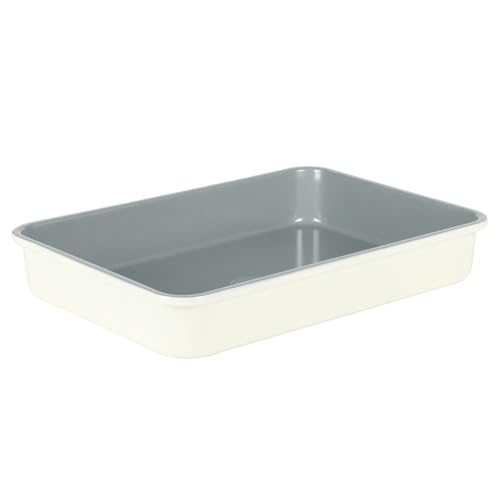 Sur La Table Kitchen Essential Bake Sale
- one 13-inch carbon steel roaster pan
- Sur La Table Kitchen Essentials is all about…
- ensures easy cleanup and exceptional food release when…
 10x14 Detroit Style Pizza Pan
- Crispy, Caramelized Crust: Our Detroit style pizza pan…
- Effortless Release and Easy Cleanup: The non-stick coating…
- Classic Detroit Design: The rectangular pan with deep…
 Farberware Nonstick Bakeware Rectangular Cake Pan with
- This baking pan's heavy-duty construction resists warping and…
- Responsibly made without PFAS, PFOA, lead, or cadmium
- The nonstick cake pan is oven safe to…
As an Amazon Associate we earn from qualifying purchases at no extra cost to you.
Quick answer: which focaccia pan should you buy?
- Best all-purpose choice: a 9 × 13-inch aluminized-steel pan, ideally 1.0–1.5 inches deep, for crisp edges, strong corner browning, and consistent baking.
- Best for very high-hydration dough: a 9 × 13-inch heavy aluminum pan with a generous coating of oil, because its lighter mass makes it easier to adjust baking time without over-darkening the base.
- Best for beginners: a coated nonstick steel pan, 9 × 13 inches, provided you use wooden, silicone, or plastic utensils.
- Best for thick, party-size focaccia: a 12 × 18-inch half-sheet pan, but only when you have enough dough and a large oven shelf.
Pan material matters because focaccia dough is wet, oily, and often baked directly against the pan. The material affects how quickly the base heats, how deeply the corners brown, and whether the dough releases cleanly after baking.
Steel vs. aluminum vs. nonstick
| Pan type | Common exact size | Typical empty weight | Heat behavior | Corner browning | Sticking risk | Best use |
|---|---|---|---|---|---|---|
| Heavy aluminized steel | 9 × 13 × 1.5 inches | 28–40 ounces | Moderate-fast, stable heat | Strong and even | Low with oil; moderate without it | Regular baking and crisp edges |
| Heavy bare aluminum | 9 × 13 × 2 inches | 18–30 ounces | Fast response, good conductivity | Even but potentially lighter | Moderate; oil is essential | High hydration and adjustable browning |
| Coated nonstick steel | 9 × 13 × 1.5 inches | 24–36 ounces | Moderate; coating can slow surface transfer slightly | Moderate, sometimes less crisp | Lowest when coating is intact | Easy release and simple cleanup |
| Thin disposable aluminum | 9 × 13 × 2 inches | 6–12 ounces | Fast but unstable | Uneven, especially in corners | Moderate to high | Occasional baking or transport |
Weights vary by gauge, rim design, and coating, so these are useful buying ranges rather than specifications for every pan. The important distinction is mass: a heavier pan stores more heat and is less likely to lose temperature when a cold, wet dough is added.
Heavy aluminized steel: the strongest all-rounder
Aluminized steel combines a steel body with an aluminum-silicon surface. It generally heats more slowly than thin aluminum but holds its temperature better. That makes it a dependable choice for focaccia with a deeply fried bottom and browned corners.
Its main weakness is sticking when the dough is placed in a dry pan. Use enough olive oil to coat the base and corners, then add a little more beneath the dough if you want a distinctly crisp, almost shallow-fried base. Uncoated or lightly coated steel also needs careful drying after washing to prevent rust at scratches or exposed edges.
Aluminum: fast, responsive, and forgiving of timing changes
Aluminum transfers heat efficiently and responds quickly when you change oven temperature or move the pan to a higher rack. A thick, light-colored aluminum pan is particularly useful for high-hydration focaccia, where the center may need extra time while the edges are already coloring.
Because aluminum is relatively light, it can produce less aggressive corner browning than heavy steel. A dark or heavily oxidized pan may brown faster than a bright, light-colored one. Bare aluminum can also discolor, so avoid prolonged contact with acidic cleaners and do not use abrasive scouring pads.
Nonstick: easiest release, not always the crispest base
Nonstick is the safest choice when clean release is your primary concern. It is useful for beginners, for focaccia containing cheese or sugar, and for kitchens where cleanup time matters. A quality coated-steel pan still provides more heat retention than a flimsy disposable tray.
The trade-off is ownership. Metal utensils, knives, abrasive scrubbers, and overheating gradually damage the coating. Once the surface becomes scratched, patchy, or visibly peeling, replace the pan rather than trying to restore it. Nonstick also benefits from some oil: the coating helps release the bread, but oil contributes to the fried crust that many people want from focaccia.
Choose the pan size by dough hydration and dough weight
Pan dimensions should match both your dough quantity and its hydration. Hydration is the water weight divided by flour weight. A dough made with 700 grams of flour and 560 grams of water has 80% hydration.
| Dough formula | Recommended internal pan | Approximate dough weight | Expected dough depth before proofing |
|---|---|---|---|
| 65–72% hydration | 9 × 13 inches | 900–1,050 grams | About 1/2 inch |
| 73–80% hydration | 9 × 13 inches | 1,000–1,200 grams | About 1/2–3/4 inch |
| 80–90% hydration | 9 × 13 inches | 1,150–1,350 grams | About 3/4 inch |
| Any hydration, thinner style | 12 × 18 inches | 1,300–1,700 grams | About 1/2–3/4 inch |
These quantities are starting points, not strict rules. To estimate coverage, multiply the pan’s length by its width. A 9 × 13-inch pan has 117 square inches of surface area; a 12 × 18-inch pan has 216 square inches. The larger pan has about 85% more area, so the same dough will spread much thinner in it.
For a tall, airy focaccia, choose a smaller footprint or increase the dough quantity. For a thin, crisp focaccia, use the larger pan or reduce the dough weight. Always measure the inside base rather than relying only on a nominal label such as “quarter sheet” or “13 × 9,” because manufacturers measure rims differently.
Decision matrix for real kitchen situations
| Your situation | Best choice | Reason |
|---|---|---|
| Budget-conscious occasional baker | Medium-gauge aluminum, 9 × 13 inches | Usually affordable, light, and versatile |
| Baking weekly or more | Heavy aluminized steel | Better heat storage and long-term durability |
| New to wet dough | Coated nonstick steel | Lower release risk and easier cleanup |
| Very crisp, dark edges | Heavy steel with oil | Stores heat and concentrates browning at the corners |
| Small oven or limited storage | 9 × 13 inches, no larger | Fits more ovens and stacks more easily |
| Large family or entertaining | 12 × 18-inch half-sheet pan | More servings, but requires more dough and oven space |
How to prevent sticking and improve corner browning
- Measure the pan’s internal base. This prevents using too little dough for a large tray or overcrowding a small one.
- Oil the entire base and corners. For a 9 × 13-inch pan, start with 1 1/2 to 2 tablespoons of olive oil, adding enough to leave a thin visible film. High-hydration dough may need closer to 2 1/2 tablespoons.
- Give the dough time to spread. Press it gently toward the corners, rest it for 10–20 minutes, and press again instead of forcing elastic dough into shape.
- Use the middle or lower-middle oven rack. This encourages bottom browning without exposing the top to excessive heat.
- Check the edges before the center. If the corners are dark but the middle is pale, move the pan higher or reduce the temperature slightly for the final portion of baking.
- Cool briefly, then release. Let the focaccia sit for about 5–10 minutes, loosen the edges with a silicone spatula, and transfer it to a rack so steam does not soften the bottom.
Durability and cleaning realities
The first failure point on nonstick pans is usually the coating, not the metal body. On steel pans, scratches, rust at the rim, and warping from sudden temperature changes are the common problems. On bare aluminum, staining is normal and does not necessarily affect performance, but deep gouges can create uneven contact and sticky spots.
Let the pan cool before washing, soak baked-on dough in warm water, and use a soft sponge. Avoid putting a hot pan under cold water, since thermal shock can warp thinner metal. Do not cut focaccia in the pan, even with a coated surface. If the pan is dishwasher-safe, repeated cycles may still shorten the life of a nonstick finish, so hand washing is the safer long-term option.
Final recommendation
For the broadest combination of crisp crust, even baking, corner browning, and durability, choose a heavy aluminized-steel pan with an internal base close to 9 × 13 inches and a depth of at least 1.5 inches. Choose heavy aluminum instead if you frequently bake very wet dough or need faster temperature response. Choose nonstick when release and cleanup matter more than the most aggressively crisp base.
Before buying, confirm the internal dimensions, material thickness or weight, maximum temperature, coating-care instructions, and whether the pan fits your oven with room for airflow. Those details are more useful than a label alone when selecting the best focaccia baking pan.








Write Your Review
No reviews yet. Be the first to share your experience!