

Key takeaways
- Cutting slices of uneven thickness, which leaves some pieces wet.
- Overloading trays and blocking airflow.
- Skipping pre-treatment on apples and pears, which brown without a lemon or ascorbic acid dip.
- Storing food before it has cooled and conditioned, which invites mold.
The best food dehydrator for most home cooks is a box-style model with a rear fan, such as the COSORI Premium 6-tray, because it dries evenly without tray rotation and runs quietly. Big harvests and jerky lovers should step up to the Excalibur 3926TB with nine trays, while the Nesco Snackmaster Pro FD-75A is the best low-cost starter.
Our top picks

As an Amazon Associate we earn from qualifying purchases at no extra cost to you.
Quick Comparison of the Best Food Dehydrators
| Pick | Best for | Drying area | Temperature range | Price range |
|---|---|---|---|---|
| COSORI Premium 6-tray | Best overall | 6.5 sq ft | 95 to 165 F | Mid-range |
| Excalibur 3926TB | Best for big batches | 15 sq ft, 9 trays | Adjustable thermostat | Premium |
| Nesco Snackmaster Pro FD-75A | Best value | 5 trays, expandable to 12 | Adjustable thermostat, no timer | Budget |
| COSORI Pioneer 5 | Best for beginners | 5 trays | Digital controls | Budget to mid-range |
Best Overall: COSORI Premium 6-Tray
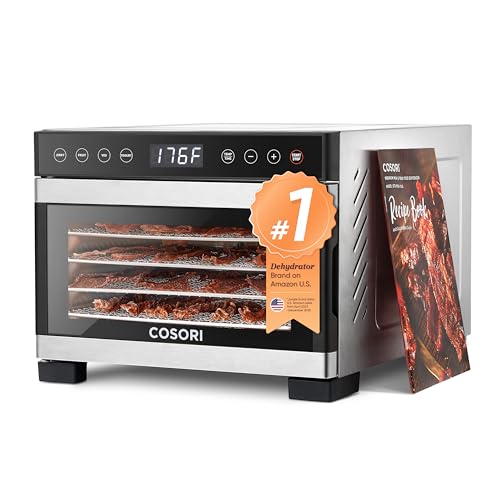
The COSORI Premium has a stainless steel build, 6.5 square feet of drying area and a 95 to 165 degree F range, covering everything from herbs to jerky. The rear fan moves air across the trays evenly, so you do not need to swap trays midway. It is rated around 48 dB, quiet enough for an open kitchen, and the trays are dishwasher-safe. It is the best match for people who dry fruit, herbs and jerky a few times a month.
Best for Big Batches: Excalibur 3926TB
The Excalibur is the long-standing choice for serious preservation. Nine trays give about 15 square feet of drying area with horizontal airflow, so you can load a whole garden harvest or several pounds of meat strips in one run. It costs the most and takes up counter space, but it is built for heavy use and long drying cycles. If you routinely dehydrate, it is the one that lasts.
Best Value: Nesco Snackmaster Pro FD-75A
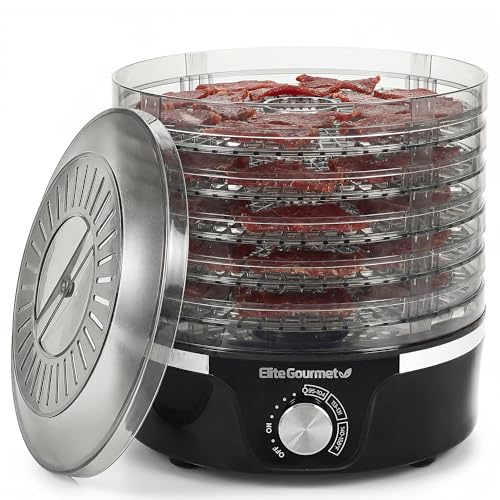
This round stackable unit starts with five trays and expands up to twelve. It is inexpensive and compact, and good for fruit leather, banana chips and jerky. The trade-offs are no timer and a fan at the base, which dries unevenly, so rotate trays during the run. It is an excellent way to try dehydrating without committing.
Best for Beginners: COSORI Pioneer 5
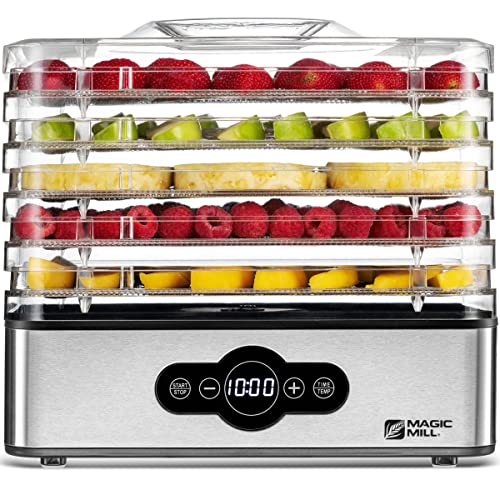
The Pioneer 5 offers digital temperature and time control in a smaller package, which makes first batches easier to manage. It suits households drying small amounts at a time.
How to Choose a Dehydrator
Box-style or stackable
Box units with a rear fan, like the COSORI and Excalibur, dry evenly with no rotation. Round stackable units, like Nesco, are cheaper, expandable and compact, but need tray rotation. If you value hands-off drying, choose a box.
Drying area and a worked example
One pound of jerky meat sliced thin takes roughly one square foot of tray space per half pound. For 3 pounds of meat, plan on about 6 square feet, which fits in a 6.5 square foot COSORI in one batch. A 15 square foot Excalibur would handle 7 pounds at once.
Temperature range and control
Herbs dry best around 95 to 115 F, fruit and vegetables around 125 to 135 F, and jerky at 160 F per USDA guidance for meat safety. Look for a thermostat that covers this range. Digital models hold temperature more accurately than dial ones.
Timer and auto shut-off
A timer matters for overnight drying. Without one, you must check the unit yourself.
Noise and cleaning
Check decibel ratings if the unit sits in your kitchen. Dishwasher-safe trays save time, and flexible mesh sheets help with sticky items like fruit leather.
Common Mistakes
- Cutting slices of uneven thickness, which leaves some pieces wet.
- Overloading trays and blocking airflow.
- Skipping pre-treatment on apples and pears, which brown without a lemon or ascorbic acid dip.
- Storing food before it has cooled and conditioned, which invites mold.
Drying Times and Temperatures Cheat Sheet
| Food | Typical temperature | Approximate time | Doneness test |
|---|---|---|---|
| Herbs | 95 to 115 F | 2 to 4 hours | Crumble easily |
| Apple rings | 135 F | 6 to 10 hours | Leathery, no moisture when torn |
| Banana chips | 135 F | 8 to 12 hours | Crisp or chewy as preferred |
| Tomatoes | 135 F | 8 to 12 hours | Leathery |
| Beef jerky | 155 to 165 F | 4 to 8 hours | Bends and cracks, does not snap |
These are general ranges; humidity, slice thickness and load size all change timing, so check the manufacturer’s guide for your unit.
Cost Per Batch
A dehydrator with a 600-watt heater running for 8 hours uses about 4.8 kWh. At 16 cents per kWh that is under one dollar per batch. Compare that with store-bought dried fruit or jerky, which often costs several times more per ounce, and the machine can pay itself back after a handful of batches, as long as you actually use it.
Best Foods for Beginners
- Apples, bananas and strawberries for forgiving fruit snacks.
- Herbs from the garden, since they need low heat and little attention.
- Kale chips and zucchini chips for easy vegetable snacks.
- Thin-sliced lean beef for jerky, trimmed of visible fat, which can turn rancid.
Cleaning and Maintenance
Wash trays after each use, since sugary residue attracts pests. Wipe the interior and fan area with a damp cloth and let the unit dry fully. Do not immerse the base. On round stackable units, check that the vents are not blocked with food particles.
Dehydrator vs Oven vs Air Fryer
Many people wonder whether they can skip the dedicated machine. An oven can dry food if it holds a temperature of 140 to 170 F, but many ovens do not go that low, and without a fan, drying is slow and uneven. Propping the door open wastes energy. Some air fryers include a dehydrate setting and work for small batches of jerky or fruit chips, but their baskets hold only a fraction of the trays in a dedicated unit. A real dehydrator is built for steady low heat and constant airflow over many hours, which is why it wins on consistency and capacity. If you expect to dry food more than a few times a year, the dedicated machine is worth the counter space; if you only want one batch of jerky for a trip, the oven is a reasonable one-off.
Also think about storage. A box-style unit like the Excalibur takes roughly the footprint of a small microwave and cannot be disassembled for storage, while stackable round units like the Nesco shrink when the trays are removed and nest together in a cupboard.
Frequently Asked Questions
What is the best temperature for jerky?
USDA guidance recommends heating meat to 160 F for safety, either before or during drying. Many dehydrators run jerky at 155 to 165 F.
How long does it take to dehydrate food?
It varies from 4 to 12 hours for most fruit and vegetables and 4 to 8 hours for jerky, depending on thickness and humidity.
Is an Excalibur worth the price?
If you dehydrate large amounts regularly, yes. For occasional use, a COSORI or Nesco does the job for less.
Can I use an oven instead?
You can, but most ovens do not hold low temperatures well and lack airflow, so a dehydrator gives more even results and uses less energy.
How should I store dehydrated food?
Cool it, then keep it in airtight jars or bags in a cool, dark place. Check for moisture during the first week.
More from Amazon
Programs that pair well with the guide above. Offers and eligibility are set by Amazon and may change.
Set up recurring deliveries of everyday items on eligible products. Terms and savings are set by Amazon.
Explore Subscribe & SaveCollect the home and kitchen items you want in one registry that guests can shop from.
Create a wedding registryFree shipping on eligible items, Prime Video and more. Eligible new members can start with a free trial.
Start a Prime free trialAudiobooks and podcasts to listen to on the go. Eligible new members can start with a free trial.
Try Audible freeAs an Amazon Associate we earn from qualifying purchases.


Write Your Review
No reviews yet. Be the first to share your experience!