

Key takeaways
- Compare the best paring knives for peeling, trimming and detail work, with blade lengths, steel types, handle designs and care tips for home kitchens.
A paring knife is the small blade that handles the jobs a chef knife is too big for. It peels apples over the sink, trims the fat from a pork chop, cores strawberries, segments oranges and slices garlic into thin slivers. Because so much of that work happens in the hand rather than on a board, a good paring knife needs a short, nimble blade, a handle that stays secure in a wet grip and an edge that can be restored quickly with a honing steel or a few passes on a stone.
This guide compares five individual paring knives, not sets, so you can replace a single worn blade or add one specialty shape to a drawer that already has the basics covered. The lineup includes a classic straight edge spear point, a longer serrated model for slippery skins, a forged German knife with a full bolster, a professional stamped knife built for long shifts and a curved bird’s beak blade for round produce and decorative cuts. Each entry lists the blade length, blade and handle materials and care guidance taken from the product listing, so the differences are easy to compare side by side.
As an Amazon Associate, we earn from qualifying purchases.
How to Choose
Blade length is the first decision. Most paring knives fall between 2.5 and 4 inches. A blade around 3 to 3.25 inches feels quick and controlled for in-hand peeling and coring, while a 3.5 to 4 inch blade gives extra reach for slicing small produce on a board and trimming meat. Shorter curved blades near 2.75 inches suit round fruit and tourné style cuts, where the edge needs to follow a curve rather than travel in a straight line.
Edge style matters just as much. A plain straight edge is the most versatile choice and the easiest to sharpen, and it makes clean cuts through apple flesh, cheese and cooked meats. A serrated edge grips tomato skins, citrus rind and crusty rolls without sliding, and it keeps working even as the teeth dull, but it cannot be restored on a standard honing steel and it tears delicate flesh rather than slicing it. Many cooks keep one of each.
Blade shape decides what the knife does best. A spear point, where both sides of the blade curve to a centered tip, is the all-purpose profile for peeling, coring and eyeing potatoes. A sheep’s foot or straight edge profile keeps the edge flat for board work. A bird’s beak blade curves inward like a claw, pulling the cut around round produce and making it the specialist for peeling peaches, shaping vegetables and cutting garnishes.
Construction and steel set the feel and the upkeep. Forged knives are shaped from a single piece of steel and usually include a bolster and full tang, which adds balance and a solid feel at a higher weight. Stamped knives are cut from a sheet of steel, so they are lighter and simpler to maintain. High-carbon stainless steel is the common ground for both styles because it resists rust while holding a working edge. Handles range from textured synthetic grips that stay secure with wet hands to smooth riveted scales and pakkawood, and the right choice depends on whether you work mostly at the sink or at the board.
Victorinox Swiss Classic 3.25-Inch Paring Knife

The Victorinox Swiss Classic in the 3.25-inch size is the straight edge spear point that many cooks treat as the default paring knife. Its stamped stainless steel blade is thin and light, which makes it easy to guide around an apple or a potato without the edge wandering. The spear point centers the tip for coring strawberries, removing eyes from potatoes and cutting the stem end out of tomatoes.
The nylon handle is molded with a slight swell that fills the palm without adding weight, and the whole knife is light enough to use for long peeling sessions without hand fatigue. Because the blade is thin stamped steel, it flexes very slightly on hard squash skins, so it is best kept to fruit, vegetables and light trimming rather than heavy root work. Edge upkeep is simple: a few passes on a honing steel before use keeps the fine edge aligned, and the steel responds well to a whetstone when the edge eventually needs a full sharpening.
Specs
| Row | Detail |
|---|---|
| Brand | Victorinox |
| Product type | Straight edge paring knife with spear point |
| Material | Stainless steel blade with nylon handle |
| Size or capacity | 3.25-inch blade |
| Key feature | Lightweight stamped blade with a centered spear point for coring and detail cuts |
| Care | Not stated |
Victorinox Swiss Classic 4-Inch Serrated Paring Knife
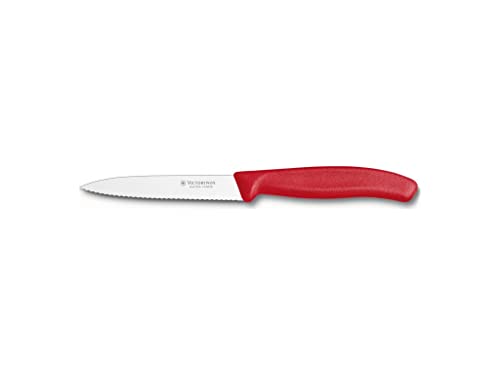
The 4-inch serrated version of the Swiss Classic solves a different problem: skins that a plain edge skates across. The serrated edge bites into tomato skin, citrus peel and the crust of a small roll, then saws through with light pressure, so the flesh underneath stays intact instead of being crushed by a pushing cut. The extra length over the 3.25-inch model gives room for that sawing motion and makes the knife useful for slicing lemons, limes and small loaves at the table.
This version uses a Fibrox handle, the textured synthetic grip Victorinox fits to its professional line, and it stays secure when hands are wet from washing produce. The spear tip still allows coring and detail work at the end of the cut. The trade-off is maintenance: serrated edges are not restored on a honing steel, and sharpening one requires a tapered rod worked into each gullet, so most owners treat this as a long-life utility blade and rely on the teeth to keep cutting as the edge ages.
Specs
| Row | Detail |
|---|---|
| Brand | Victorinox |
| Product type | Serrated paring knife with spear tip |
| Material | Stainless steel blade with Fibrox handle |
| Size or capacity | 4-inch blade |
| Key feature | Serrated edge grips slippery skins on tomatoes and citrus without sliding |
| Care | Not stated |
Wüsthof Classic 3.5-Inch Paring Knife

The Wüsthof Classic is the forged option in this lineup. It is precision forged from a single blank of high-carbon stainless steel, tempered to 58 on the Rockwell scale, with a full tang that runs the length of the handle and a full bolster between blade and grip. That construction gives the knife a planted, balanced feel that stamped knives do not match, and the bolster acts as a finger guard during board work.
The handle is polyoxymethylene, a dense synthetic chosen because it resists fading and discoloration, and it is triple riveted in the traditional style. At 3.5 inches, the plain edge blade is long enough for trimming silver skin, slicing small vegetables on a board and peeling in hand, and the fine edge can be maintained on a honing steel and restored on a whetstone. The listing guidance recommends hand washing, which suits a forged knife: wash it in warm water, dry it straight away and store it on a magnetic strip or in a block slot so the edge never rattles in a drawer.
Specs
| Row | Detail |
|---|---|
| Brand | Wüsthof |
| Product type | Forged paring knife with plain edge |
| Material | High-carbon stainless steel blade with polyoxymethylene handle |
| Size or capacity | 3.5-inch blade |
| Key feature | Precision-forged full tang with full bolster and triple-riveted handle |
| Care | Hand wash recommended |
Mercer Culinary Millennia 3.5-Inch Paring Knife

The Mercer Culinary Millennia M22003 is built for professional kitchens, where a paring knife might peel and trim for hours at a stretch. The blade is stamped from one piece of high-carbon Japanese steel, a style chosen for easy edge maintenance and long-lasting sharpness, and the plain edge is simple to keep aligned with a steel between tasks.
Grip is the headline feature. The handle blends Santoprene over a firm core, with textured finger points along the underside and a finger guard at the bolster end, so the knife stays put in a wet or gloved hand. The handle is also sized generously for a small knife, which suits cooks who find slim handles tiring. At only a tenth of a pound, the knife stays light despite that larger grip. Care is hand wash only: wash with warm water and mild soap, rinse and dry completely, and keep it out of the dishwasher so the edge and handle finish last.
Specs
| Row | Detail |
|---|---|
| Brand | Mercer Culinary |
| Product type | Paring knife with plain edge |
| Material | One-piece high-carbon Japanese steel blade with Santoprene handle |
| Size or capacity | 3.5-inch blade |
| Key feature | Textured finger points and a finger guard for a non-slip grip |
| Care | Hand wash only |
TUO Bird Beak Paring Knife, Falcon Series

The TUO Bird Beak is the specialist of the group. Its 2.75-inch blade curves inward like a beak, a shape also called a tourné knife, and that curve pulls the edge around round produce as you rotate the item in your hand. It is the right profile for peeling peaches and kiwis, turning potatoes and carrots into barrel shapes, fluting mushrooms and cutting decorative garnishes where a straight blade would leave flat spots.
TUO forges the blade from high-carbon German stainless steel and fits a full tang into a riveted pakkawood handle, so despite the small blade the knife has a solid, balanced feel at 0.2 pounds. The plain edge sharpens like any straight paring knife on a steel or stone. Because the blade is short and curved, it is not the tool for board slicing or trimming meat; treat it as the second paring knife in the drawer, the one you reach for when the produce is round and the cuts need to look tidy.
Specs
| Row | Detail |
|---|---|
| Brand | TUO |
| Product type | Bird’s beak paring knife, also called a tourné knife |
| Material | High-carbon German stainless steel blade with pakkawood handle |
| Size or capacity | 2.75-inch blade |
| Key feature | Curved blade follows the shape of round produce for peeling and tourné cuts |
| Care | Not stated |
FAQ
What blade length is best for everyday paring work?
A blade between 3 and 3.5 inches covers most everyday work. It is long enough to slice small produce on a board and trim meat, yet short enough to stay controlled when you peel in hand. Go shorter, around 2.75 inches, only for a curved bird’s beak blade, and longer, near 4 inches, if you mostly slice citrus and tomatoes with a serrated edge.
Should I choose a straight edge or a serrated paring knife?
Choose a straight edge as your main paring knife, because it makes cleaner cuts, handles the widest range of tasks and can be maintained on a honing steel and a whetstone. Add a serrated paring knife if you often cut tomatoes, citrus or crusty rolls, since the teeth grip skins that a plain edge slides across. The two styles complement each other rather than replacing each other.
What is a bird’s beak paring knife used for?
A bird’s beak, or tourné, knife has a short blade that curves inward, which lets the edge follow the round surface of fruit and vegetables as you turn them in your hand. It is used for peeling peaches and potatoes, removing blemishes, shaping tourné vegetables and cutting garnishes such as radish rosettes and fluted mushrooms. It is a detail tool rather than a general slicing knife.
How should I store and care for a paring knife?
Wash the knife by hand with warm water and mild soap, then dry it completely before putting it away, even when the listing does not require hand washing, because it protects the edge. Store it on a magnetic strip, in a block slot or with a blade guard rather than loose in a drawer. Hone a plain edge regularly and sharpen on a stone when honing no longer restores it.
Final Verdict
For a single all-purpose pick, the Victorinox Swiss Classic 3.25-inch straight edge covers peeling, coring and trimming with the least fuss, and its serrated 4-inch sibling is the natural second knife for tomatoes and citrus. The Wüsthof Classic suits cooks who prefer the weight and balance of a forged, full tang blade, while the Mercer Culinary Millennia is the workhorse choice for long prep sessions and wet hands. Add the TUO Bird Beak when round produce and garnish work are regular parts of your cooking. Any of the five will outperform a dull drawer knife, so choose by blade shape first and handle feel second.
Product and ASIN Reference
| Product | ASIN |
|---|---|
| Victorinox Swiss Classic 3.25-Inch Paring Knife, Straight Edge, Spear Point, Black | B0061SWLKW |
| Victorinox Swiss Classic 4-Inch Spear Tip, Serrated, Red Paring Knife | B005LRYEJU |
| Wüsthof Classic 3.5-Inch Paring Knife | B00005MEGH |
| Mercer Culinary M22003 Millennia Black Handle, 3.5-Inch Paring Knife | B001EN2L1I |
| TUO Bird Beak Paring Knife, 2.75 Inch, Falcon Series | B0924MMSTJ |
More from Amazon
Programs that pair well with the guide above. Offers and eligibility are set by Amazon and may change.
Set up recurring deliveries of everyday items on eligible products. Terms and savings are set by Amazon.
Explore Subscribe & SaveCollect the home and kitchen items you want in one registry that guests can shop from.
Create a wedding registryFree shipping on eligible items, Prime Video and more. Eligible new members can start with a free trial.
Start a Prime free trialAudiobooks and podcasts to listen to on the go. Eligible new members can start with a free trial.
Try Audible freeAs an Amazon Associate we earn from qualifying purchases.




Write Your Review
No reviews yet. Be the first to share your experience!